 Whatsapp:
  Email: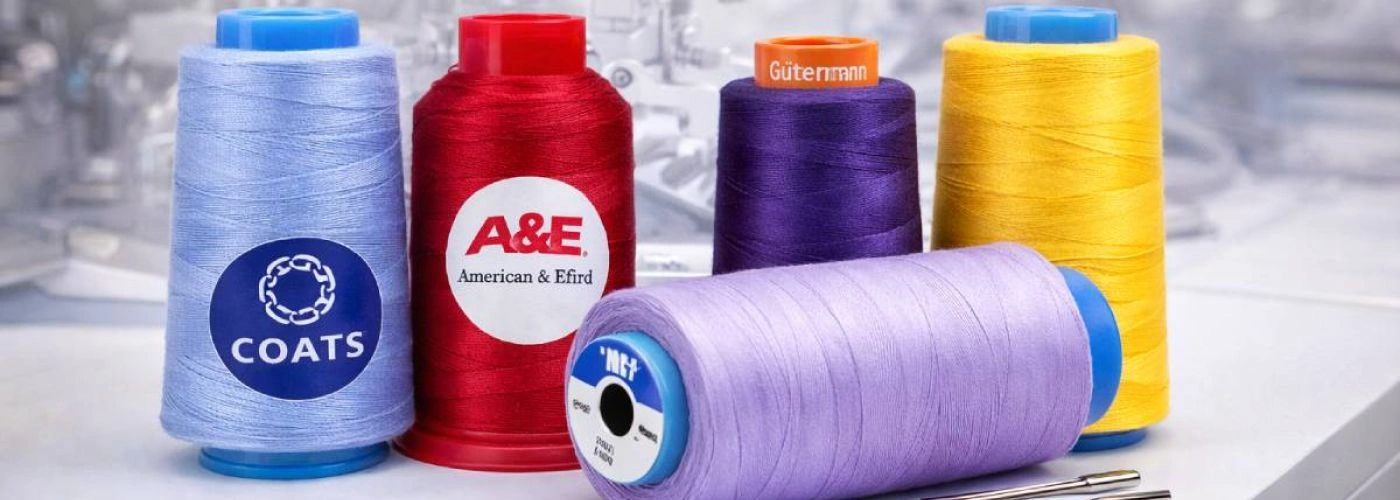
What Sewing Thread Brands Are Recommended for Industrial Sewing Machines?
Introduction
Selecting the right thread brands for industrial sewing machines directly determines production efficiency, stitch quality, and machine longevity. When your sewing machine runs at 5,000+ stitches per minute for hours on end, the difference between premium industrial sewing thread and consumer-grade alternatives becomes immediately apparent in breakage rates, downtime costs, and seam integrity.
If you are a beginner just starting with industrial sewing, this guide is helpful for understanding foundational advice on choosing the right thread for your needs.
This guide covers established industrial thread manufacturers suitable for large-scale garment production, upholstery manufacturing, and heavy-duty applications. The focus remains on wholesale-only suppliers and brands that maintain consistent quality thread across millions of meters of production. This information is helpful for both beginners and experienced professionals. Consumer-grade threads from craft stores fall outside this scope—they simply cannot withstand the demands of industrial machines operating at factory speeds.
Top recommended brands for industrial sewing include Coats & Clark, A&E (American & Efird), Amann Serafil, MH Thread, Gutermann, Mettler, and Aurifil for wholesale industrial applications. These manufacturers provide the tensile strength, consistency, and bulk supply capabilities that production environments demand. Using high quality thread is essential for industrial applications to ensure durability, seam strength, and reliable machine performance.
By the end of this article, you will understand:
-
How to assess brand reliability for industrial polyester thread and specialty threads
-
Wholesale sourcing options for high-volume manufacturing
-
Thread specifications that ensure optimal performance on industrial sewing machines
-
Long-term supply stability considerations for production planning
Understanding Industrial Thread Requirements
Industrial-grade sewing machine thread must meet standards that consumer threads cannot approach. Where a home sewing machine might run 800 stitches per minute for brief sewing projects, industrial machines sustain 4,000-7,000 SPM continuously. Matching thread thickness to both fabric type and machine requirements is essential for optimal performance and durability. For stretch fabrics such as sportswear and swimwear, using threads with stretch properties ensures seams remain flexible and resilient. Consumer thread typically fails within minutes under these conditions—fibers fray, tension becomes inconsistent, and breakage halts production lines costing thousands per hour.
The connection between thread quality and machine performance in manufacturing settings is direct and measurable. Good quality thread reduces needle heat by maintaining consistent friction, prevents lint buildup that clogs tension mechanisms, and delivers seams that withstand industrial laundering without puckering or failure. Using the correct bobbin thread and ensuring compatibility with both the sewing machine and fabric type is crucial for smooth operation. Selecting the right thread shades to match or complement fabric colors is important for professional, visually appealing results. Industrial threads are used for sewing clothes, quilting, hemming, and sometimes for hand stitching when machine sewing is not suitable. Polyester thread dominates the garment industry because it offers a unique combination of strength, durability, color stability, and low shrinkage. All-purpose polyester thread is a smooth, strong, and versatile option suitable for nearly every sewing project.
Strength and Durability Standards
Breaking strength requirements for industrial applications exceed 8 grams per denier for high-tenacity threads. Using high quality thread is essential to meet the strength and durability standards required for industrial sewing machines. Standard polyester thread for garment manufacturing typically ranges from Tex 24 to Tex 70, with heavier applications like denim requiring Tex 80 or higher. This thread weight directly correlates to the durability of finished seams under stress. Specialty threads are crafted to meet the unique demands of particular sewing applications, ensuring optimal performance and professional-looking results.
UV resistance and colorfastness specifications matter significantly for garments and fabrics facing repeated washing or sun exposure. Consistent dyeing across shades is crucial for color matching in large production runs, ensuring uniform appearance throughout the batch. Cowboy bonded thread is dyed consistently across different sizes to ensure color matching when switching sizes on a project. Quality thread from recommended brands retains vibrancy through 50+ laundry cycles and maintains 90% tensile strength after 1,000 hours of UV exposure. Fading resistance prevents customer returns and protects brand reputation for manufacturers.
Supply Chain Considerations
Bulk availability and consistent quality across large orders represent a key factor in industrial thread selection. Leading suppliers carry a wide range of top brands, sizes, and colors to meet industrial needs. A factory purchasing 500 cones of polyester thread expects identical tensile strength, twist rate, and color shade across every spool. Reputable manufacturers maintain strict quality control that delivers this consistency—verification successful waiting times decrease, and production proceeds without thread-related stoppages.
Technical support and shade matching services from manufacturers prove invaluable for production environments. Amazon offers a variety of sewing threads suitable for industrial machines, including options for bulk purchasing. When you need to match thread to specific fabrics for a 100,000-piece garment run, working with brands that offer custom dyeing, technical consultation, and responsive support becomes essential rather than optional.
Top Industrial Thread Brands
Understanding industrial thread requirements creates the foundation for evaluating specific brand recommendations. Toledo Industrial Sewing Machines serves as the U.S. dealer for Cowboy industrial sewing machine thread, along with several other leading brands.. The following manufacturers have established track records supplying factories worldwide with sewing thread that meets production demands.
In addition to well-known names, top brands for industrial sewing machines include Gutermann, Mettler, Aurifil, Isacord, Maxi-Lock, Fil-Tec, and Cowboy. Isacord is a premium-quality polyester thread designed specifically for machine embroidery. Maxi-Lock is a high-quality thread suited for serging and coverstitching. Cowboy thread is available in bonded nylon and polyester, designed for industrial sewing applications. Amann Serafil is a high-end polyester continuous filament thread made in Germany. Fil-Tec offers PremoBond, a strong polyester thread suitable for marine and awning applications, and Fusion 70 bonded nylon, engineered for strength and smooth sewability in leatherworking applications. Aurifil is recognized for premium Egyptian long-staple cotton, ideal for high-volume quilting and producing minimal lint, and is known for being lint-free and consistent, making it ideal for high-volume, high-quality work.
For quilting, using high-quality thread such as Aurifil enhances projects by providing durability and vibrant color options, ensuring both longevity and visual appeal.
Coats & Clark Industrial Division
Coats & Clark stands as the global market leader in industrial sewing thread, with production facilities across continents and distribution networks reaching virtually every manufacturing hub. Their scale means consistent stock availability even during supply chain disruptions—a practical advantage that smaller brands cannot match.
Their polyester thread and nylon specializations cover the full spectrum of garment manufacturing needs. Coats Dual Duty XP, featuring a polyester core with cotton wrap, delivers both strength and soft hand feel for apparel. Their bonded nylon options serve leather goods, footwear, and applications requiring superior abrasion resistance. For factories seeking a single-source supplier covering most thread needs, Coats typically emerges as the default choice.
A&E (American & Efird)
A&E maintains strong North American manufacturing presence with a quality reputation built over decades of supplying major apparel brands. Their SunStop line specifically addresses outdoor applications—tents, awnings, and marine fabrics where anti-wicking and mildew resistance create durable seams in challenging conditions.
Bonded polyester thread and bonded nylon thread options from A&E serve heavy-duty applications requiring superior strength. Their thread construction adds resin coatings that prevent fraying during high-speed sewing and create seams holding up under extreme stress. For upholstery, automotive interiors, and industrial textiles, A&E provides specialty threads with proven performance.
Amann Serafil
German engineering drives Amann Serafil’s precision manufacturing standards. Their thread maintains exceptionally tight tolerances on diameter consistency—a specification that directly impacts tension stability on industrial machines running at maximum speed.
Size range from #69 to #277 in various spool configurations covers applications from fine linings to heavy canvas. Amann’s presence in European manufacturing makes them a natural choice for factories prioritizing traceability and environmental certifications. Their threads meet strict EU standards for chemical content and sustainability—increasingly important as brands respond to ESG demands.
MH Thread
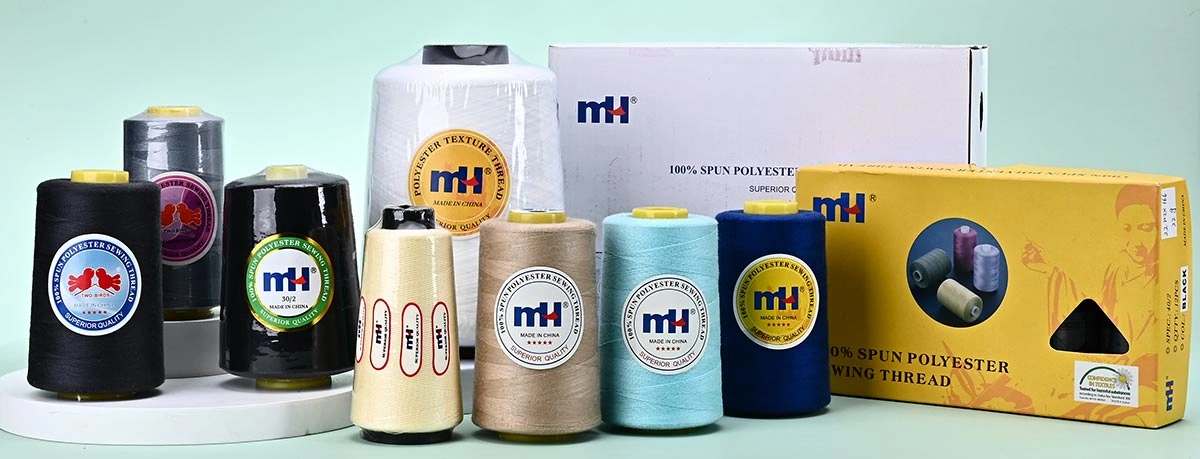
MH Thread operates a wholesale-only distribution model specifically serving industrial customers. This focus means their entire product line, pricing structure, and service model aligns with factory requirements rather than retail considerations.
Bulk supply capabilities for garment factories and large-scale manufacturing distinguish MH Thread’s approach. They offer spun polyester for general seaming, core-spun construction for high-speed lockstitch operations, and high-tenacity filament for stress points. Their threads power production lines across Asian manufacturing facilities producing tens of thousands of garments daily. For factories seeking a dedicated industrial supplier with competitive wholesale pricing, MH Thread merits serious consideration.
Detailed Brand Analysis and Selection Criteria
Evaluating brands for long-term industrial partnerships requires systematic comparison across specifications that matter for production. Price per cone means little if quality inconsistencies create machine downtime or seam failures in finished goods.
It is essential to match thread thickness to your project requirements and the capabilities of your industrial sewing machines, as using the wrong thickness can affect stitch quality and durability. Selecting the right shades is also crucial for achieving color harmony and professional results—choosing a thread shade slightly darker or lighter than the fabric can impact the finished appearance, and consistent dyeing across shades ensures a uniform look.
For specialized applications, Kevlar thread is approximately 2.5 times stronger than nylon or polyester and is commonly used in protective gear. Additionally, PTFE threads, such as Tenara from Fil-Tec, offer superior UV, chemical, and mildew resistance, making them ideal for harsh outdoor conditions.
Brand Comparison Matrix
| Criterion | Coats & Clark | A&E | Amann Serafil | MH Thread |
|---|---|---|---|---|
| Thread Weight Range | Tex 18-135 | Tex 21-180 | Tex 24-277 | Tex 24-120 |
| Fiber Types | Polyester, cotton, nylon, blends | Polyester, bonded nylon, specialty | Polyester, high-tenacity filament | Spun, core-spun, filament polyester |
| Spool Sizes | 1,000-10,000m cones | 1,500-6,000m cones | 1,000-5,000m spools | 5,000m+ industrial cones |
| Wholesale Availability | Global distributors | North American focus | European distribution | Direct wholesale only |
| Technical Support | Extensive | Strong | Excellent | Production-focused |
| Custom Shade Matching | Yes | Yes | Yes | Limited |
This comparison helps manufacturers choose based on specific production requirements. Factories producing fine garments may prioritize Amann’s precision, while high-volume basic apparel production might favor MH Thread’s wholesale pricing and bulk availability. Facilities requiring decorative stitching or embroidery applications should consider brands offering specialty thread lines beyond standard seaming products.
Sourcing and Procurement Process
- Request samples from 2-3 potential suppliers — Obtain actual production samples rather than retail packaging. Test on your specific industrial machines at normal operating speeds before proceeding with any purchase commitment.
- Conduct machine testing under production conditions — Run samples for full shifts, monitoring for breakage, lint accumulation, and tension stability. Document stitch quality on your specific fabrics with your needle sizes. Double check results against current thread performance.
- Negotiate wholesale pricing with volume commitments — Industrial thread pricing varies significantly based on annual volume. Establish pricing tiers that reward loyalty while maintaining flexibility to adjust quantities.
- Establish quality control protocols in supply agreements — Define acceptable tolerances for tensile strength, diameter consistency, and color matching. Include provisions for batch testing and rejection procedures.
- Plan long-term supply agreements with inventory provisions — Create stocking agreements that ensure availability while minimizing storage costs. Consider consignment arrangements for high-volume, stable-demand thread specifications.
Common Challenges and Solutions
Industrial thread sourcing presents predictable challenges that experienced manufacturers anticipate and address proactively. Taking pictures to document successful sewing projects and machine modifications provides valuable visual proof, helping to build credibility and clearly illustrate that higher thread sizes and modifications can be achieved without issues.
Inconsistent Thread Quality Across Batches
Quality variations between production batches create sewing machine tension problems, stitch inconsistencies, and potential seam failures. The solution involves establishing quality control protocols with certified suppliers and maintaining sample references from approved batches. Request certificates of analysis with each shipment and test incoming thread against retained standards before releasing to production. This prevents the frustration of discovering quality issues mid-run when thousands of garments are at stake.
Supply Chain Disruptions
Global events regularly disrupt thread supply chains, with post-2020 disruptions spiking prices 15% and creating extended lead times. Developing relationships with multiple approved brands provides backup sourcing options. Maintain strategic inventory levels—typically 60-90 days of critical thread stock—to bridge supply gaps without production interruption. Contact suppliers early when you anticipate increased demand periods.
Thread Specification Mismatches
Using incorrect thread weight for specific needle sizes or fabrics causes breakage, skipped stitches, and seam failures. Work directly with brand technical teams for machine-specific recommendations. For example, Tex 40 thread pairs optimally with #16 needles—mismatches in either direction compromise smooth stitching and create unnecessary problems. Brands like Coats and Amann offer technical consultation services precisely to prevent these issues.
Thread Storage and Maintenance
Proper storage and maintenance of sewing thread are essential for ensuring optimal performance and longevity in any industrial sewing environment. Whether you’re working with polyester thread, cotton thread, or specialty threads like bonded nylon, the way you store and handle your thread can directly impact the quality of your stitching, the durability of your seams, and the smooth operation of your sewing machine.
To protect your sewing thread from fading, breakage, and loss of strength, always store spools in a cool, dry place away from direct sunlight. Exposure to UV rays and high temperatures can cause cotton thread to weaken and fade, while even durable polyester thread can suffer from prolonged heat or humidity. Industrial sewing facilities should avoid storing thread near windows, heating vents, or in areas prone to moisture, such as basements or attics. Instead, use dedicated thread storage boxes or cabinets that keep spools organized and shielded from environmental stress.
Handling your thread with care is another key factor in maintaining quality. Avoid pulling or stretching thread excessively, as this can cause fibers to break or become thin, leading to breakage during high-speed sewing. When threading your sewing machine, always match the thread weight to the correct needle size—using a heavy thread with a fine needle can result in skipped stitches or thread breakage, while a thin thread in a large needle may not provide the necessary seam strength for industrial projects.
Regular inspection of your thread stock is also important. Before starting a new sewing project, double check spools for signs of fraying, discoloration, or tangling. Replace any thread that appears damaged to prevent issues like uneven stitching or machine jams. For specialty threads such as bonded nylon, be mindful of the bonding agent—store these threads in conditions that prevent the bond from degrading, ensuring consistent performance and durability in your finished garments.
By implementing these storage and maintenance practices, you help guarantee that your sewing machine thread remains in top condition, supporting smooth stitching and high quality results in every project. Proper care not only extends the life of your thread but also reduces downtime, minimizes breakage, and ensures that your industrial sewing machines operate at peak efficiency. Whether you’re producing fine garments, heavy-duty workwear, or decorative stitching, investing in thread maintenance is a simple yet effective way to protect your production quality and bottom line.
Conclusion and Next Steps
Brand selection for industrial sewing thread should prioritize supply reliability, technical support, and proven industrial performance over marginal price differences. The cost of production downtime from thread failure far exceeds any savings from choosing inferior suppliers. Coats & Clark, A&E, Amann Serafil, and MH Thread each offer distinct advantages depending on your manufacturing focus, geographic location, and volume requirements.
To move forward with thread supplier optimization:
- Request samples from 2-3 recommended brands matching your primary production needs
- Conduct controlled testing on your industrial machines under actual production conditions
- Review results with your technical team, documenting performance data
- Negotiate wholesale agreements with preferred suppliers
- Establish quality control and inventory management protocols
Related topics worth exploring include thread storage optimization to maintain thread quality in your facility, machine maintenance schedules that complement proper thread selection, and quality control systems for finished seam inspection.
Additional Resources
For wholesale thread inquiries:
- MH Thread: Contact directly for industrial wholesale pricing on polyester and specialty threads
- Coats Industrial: Regional distributors available through manufacturer website
- A&E: North American factory direct programs for qualified manufacturers
- Amann: European distribution network with global shipping capabilities
Thread specification references:
- Tex-to-ticket conversion tables for matching existing specifications
- Needle-to-thread pairing charts for optimal results
- Breaking strength standards by application (apparel, upholstery, technical textiles)
Industry standards for thread testing follow ISO 2060 (linear density), ISO 2062 (breaking force), and AATCC methods for colorfastness evaluation. Request compliance documentation from suppliers when establishing new vendor relationships.
