Whatsapp:
  Email: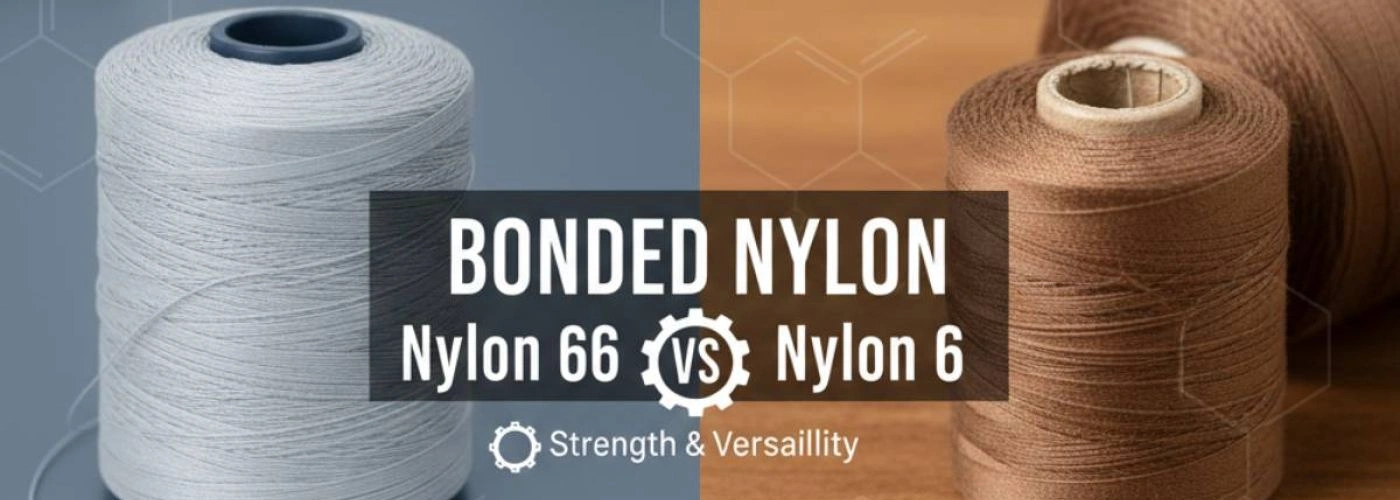
Bonded Nylon Sewing Thread: Nylon 66 vs Nylon 6
Key Takeaways
- Bonded nylon thread is a resin-coated, lubricated industrial sewing thread designed for high-speed manufacturing, with both Nylon 66 (PA66) and Nylon 6 (PA6) serving as base polymers with distinct performance characteristics.
- Nylon 66 bonded thread delivers higher tensile strength, better heat resistance, and superior abrasion resistance, making it the standout choice for critical seams in leather goods, automotive upholstery, and outdoor gear.
- >Nylon 6 bonded thread offers improved flexibility, easier processing, and cost effective production for medium-duty applications where extreme performance is not required.
- This article compares both materials specifically for heavy duty sewing thread applications, helping industrial buyers and technical teams select the right nylon for their project requirements.
-
A practical selection guide and summary comparison table are included below to support procurement and engineering decisions, with MH supplying both thread types in a wide size range for industrial sewing machines and automated production lines.
What Is Bonded Nylon Thread?
Bonded nylon thread is an industrial sewing thread crafted from continuous filament nylon fibers that have been coated with a bonding agent to lock individual filaments together. This bonding process creates a cohesive, smooth thread structure that performs reliably at high sewing speeds without fraying, fuzzing, or splitting during the stitching process.
The bonding treatment typically involves applying a polyurethane or similar polymer resin between the filaments, combined with lubrication during the finishing stage. The result is a slightly glossy, low-friction thread that passes cleanly through tensioners, guides, and needle eyes on industrial machines. This construction is essential for factories running at speeds exceeding 5,000 stitches per minute, where unbonded thread would quickly degrade and cause production problems. Bonded nylon thread is compatible with most sewing machines, allowing for efficient and hassle-free stitching.
Both Nylon 66 (PA66) and Nylon 6 (PA6) can serve as the base filaments for bonded nylon sewing thread. The bonding process itself is similar for both materials, meaning the key performance differences come from the inherent properties of the base polymer rather than the bonding method.
Common ticket sizes and deniers for bonded nylon thread include 20s/3, 40s/3, and Tex ranges from 45 to 270, depending on the application. Each cone of bonded nylon thread contains an impressive length of 1500 meters or 1650 yards. These sizes are commonly used in leather goods manufacturing, upholstery production, luggage assembly, and outdoor products where durability and seam strength are critical requirements. Bonded nylon thread is specifically designed for a wide range of applications, including upholstery, drapery, luggage, and leather goods. It is widely applied in these and other high-performance products, such as premium tires, where its molecular structure and bonding enhance its suitability for demanding uses.
MH manufactures bonded nylon thread on modern twisting, bonding, and winding lines, with quality control focused on consistent tensile strength, even bonding distribution, and reliable lubrication. This ensures smooth machine performance across different equipment types and production environments. For best results, use a needle size of 16, 18, or 20 with bonded nylon thread to ensure smooth sewing and prevent potential issues. 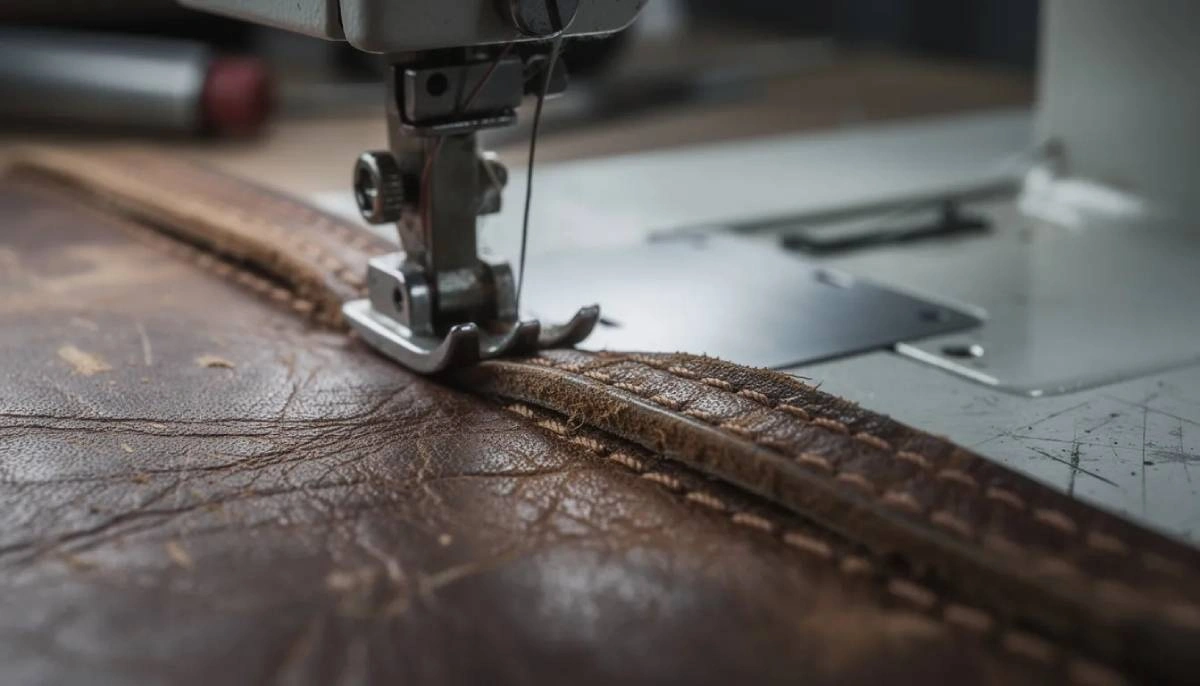
Why Bonding Is Important in Nylon Sewing Thread
The bonding layer on nylon thread directly affects sewing outcomes in industrial manufacturing. Well-bonded thread produces reduced fraying during high-speed operations, less needle heat damage when stitching through thick materials, more consistent stitch formation, and improved abrasion resistance in the finished seam.
Here’s what the bonding layer accomplishes during the sewing process:
- Filament protection: The bonding agent keeps individual filaments from opening, separating, or snagging as thread passes through tensioners, guides, and the needle eye at high speeds. This prevents the “fuzzing” that degrades stitch quality and causes thread breaks.
- Friction and heat reduction: Bonded thread exhibits lower friction against machine components, which minimizes needle heat buildup. This is especially important when sewing thick stacks of leather, PVC, coated fabrics, or multi-layer webbing where needle temperatures can rise significantly.
- Enhanced wear resistance: The bonding layer adds protection against mechanical wear in applications like seat belts, luggage seams, and outdoor gear exposed to constant movement and vibration throughout their service life.
- Ply stability: Proper bonding minimizes ply separation and fiber pickup in lockstitch and chainstitch seams, which is critical for automated manufacturing where consistent seam appearance affects product quality grades.
Well-bonded thread runs cleaner on industrial sewing machines, allowing higher operating speeds and fewer breaks per shift. For large-scale garment and leather factories, this translates directly into improved productivity and lower labor costs per unit.
Insufficient bonding or inconsistent bonding quality can cause skipped stitches, lint buildup on machine components, and irregular seam appearance. These issues create rework, slow down production lines, and affect final product quality—making controlled bonding processes a key factor when sourcing industrial sewing thread.
Overview of Nylon 66 and Nylon 6
Nylon 66 (PA66) and Nylon 6 (PA6) are the two main engineering polyamides used for apparel, technical textiles, and industrial sewing thread. Nylon 66 is widely recognized as a high performing engineering plastic and a popular material in various industries due to its superior strength, chemical resistance, and versatility in applications such as electrical components and metal replacements. While they share many characteristics as high performing engineering plastics, their different polymer structures create distinct performance profiles that affect how they behave in sewn seams.
The chemical structure differences between these materials stem from their polymerization processes:
- Nylon 6 is produced from a single monomer called caprolactam, which contains 6 carbon atoms. The resulting polymer chains form a less crystalline structure compared to Nylon 66. Nylon 6 can also be processed at a lower temperature, which contributes to its ease of manufacturing.
- Nylon 66 is synthesized from two monomers—adipic acid and hexamethylenediamine—each containing 6 carbon atoms. This dual-monomer process creates a more symmetrical, tightly packed molecular structure with higher crystallinity.
Both materials are semi crystalline polymers that deliver strong mechanical properties, good wear resistance, and reliable performance in demanding conditions. Glass is often used as a reinforcement material in both Nylon 6 and Nylon 66 to improve strength, impact resistance, and dimensional stability, especially for demanding engineering applications. However, Nylon 66 typically provides:
- A higher melting point and better heat resistance
- Greater stiffness and tensile strength
- Superior abrasion and chemical resistance in harsh environments
Nylon 66 also has a denser hydrogen-bonded network, resulting in higher tensile strength and stiffness, and is utilized in manufacturing high-load applications such as airbags, lifting slings, and heavy fabrics.
In contrast, Nylon 6 generally offers:
- Slightly higher impact strength and flexibility
- Easier processing and dyeing during manufacturing
- Lower raw material cost in many global markets
Nylon 6 is more flexible, cost-effective, and easier to dye than Nylon 66, and it is typically less expensive, costing around 30% less.
When these base polymers are converted into bonded nylon thread, these inherent material differences translate into measurable performance variations in sewn seams. Bonded Nylon 66 is more expensive, harder to dye, and harder to process than Nylon 6, while Nylon 6 is easier to process due to its lower processing temperature and lower shrinkage. The following sections explore these differences in detail, focusing on practical implications for industrial applications.
Nylon 66 vs Nylon 6: Key Differences in Bonded Nylon Thread
Understanding how Nylon 66 and Nylon 6 behave once they are made into bonded nylon sewing thread is essential for making informed material selections. The following comparisons focus on real sewing conditions and end-use performance rather than abstract polymer theory.
Each property discussed below directly affects thread runnability, seam durability, and long-term product performance in industrial applications.
Tensile Strength
At equivalent ticket sizes (such as Tex 70 or Tex 135), bonded Nylon 66 thread generally delivers approximately 20% higher tensile strength compared with bonded Nylon 6. This superior strength also extends to better strength retention over time, particularly under load and environmental stress.
Higher tensile strength translates into practical manufacturing benefits:
- Greater safety margins for load-bearing seams in straps, harnesses, luggage handles, work boots, and automotive upholstery
- Reduced risk of seam failure under shock loads or repeated stress cycles during product use
- Better performance in applications where seams must hold heavy loads over years of service
For many apparel and light-duty products, Nylon 6 strength is entirely adequate. However, for critical seams in leather goods, outdoor gear, and automotive components, Nylon 66 is often specified by OEM technical standards and brand quality requirements. MH can supply detailed strength data per size on request to support engineering specifications.
Heat Resistance
Nylon 66 has a higher melting point (approximately 260°C versus 220°C for Nylon 6) and a higher heat deflection temperature, which becomes important in industrial sewing where needle friction generates significant heat. Nylon 66 is more heat resistant than Nylon 6 due to its dense molecular structure and higher crystallization percentage.
Better heat resistance means:
- Lower risk of thread softening, glazing, or fusing in the needle area during high-speed sewing through dense material stacks
- More stable performance in applications exposed to elevated temperatures, such as under-hood automotive components, engine-adjacent trim, or dark outdoor fabrics under intense sun
Nylon 6 can handle typical garment sewing temperatures without issues. However, it may show increased sensitivity during high-speed, high-density stitching through thick materials like multi-layer leather, foam composites, or heavy webbing where needle heat builds rapidly.
For example, in a car seat factory sewing dense foam sandwiched between PVC layers, Nylon 66 bonded thread provides a measurably better margin against needle heat problems compared with Nylon 6, reducing thread breaks and improving seam consistency.
Abrasion Resistance
Nylon 66 offers better abrasion resistance than Nylon 6 due to its higher crystallinity and tighter molecular packing. Testing shows Nylon 66 fibers can endure over 60,000 abrasion cycles compared with approximately 40,000 cycles for Nylon 6—a 33% improvement in wear resistance.
This difference connects directly to seam life in real-world use:
- In seats, bags, rucksacks, and safety equipment, thread is constantly rubbed by fabric edges, hardware, and user movement
- Higher abrasion resistance keeps seams intact longer, even when outer fabric begins to show visible wear
- Products maintain structural integrity throughout their expected service life
The bonded coating itself adds abrasion resistance by shielding individual filaments from surface damage. However, Nylon 66’s inherent material properties make it the preferred choice for applications with very high wear exposure.
Consider luggage seams around wheels and handles—these areas experience constant abrasion from rolling, handling, and contact with surfaces. Nylon 66 bonded nylon thread delivers superior durability in these high-stress zones compared with Nylon 6 in long-term field use.
Elasticity and Flexibility
Nylon 6 tends to be slightly more flexible with better flex-fatigue performance under certain conditions. Nylon 66, with its higher crystalline structure, provides greater stiffness and maintains its form more firmly under load.
These characteristics translate into different sewing behaviors:
-
Nylon 6 bonded thread conforms more readily to soft, drapey fabrics and garments, producing a smoother hand feel and better seam comfort in finished products
-
Nylon 66 bonded thread creates firmer seams that resist stretching and distortion, which is beneficial in support structures, load-bearing applications, and technical products
Material selection should match end-use requirements. Too much stiffness in fine apparel can create uncomfortable seams and affect garment drape. Conversely, too much elasticity in load-bearing seams can lead to seam growth or gradual distortion under repeated stress.
MH can offer guidance on optimal material selection and thread construction (such as 2-ply versus 3-ply configurations) to balance flexibility and stability for specific applications.
Moisture Absorption
Both Nylon 6 and Nylon 66 absorb moisture from the environment, which can affect dimensions and mechanical properties. However, the bonding layer on bonded nylon thread helps reduce immediate water uptake compared with unbonded constructions.
The key differences in water absorption behavior are important to consider when choosing the best industrial sewing thread for your projects.
- =Nylon 6 typically has higher moisture absorption (around 4-5% equilibrium), which can reduce stiffness but may also increase flexibility in humid environments
- Nylon 66 absorbs approximately 25% less moisture than Nylon 6, maintaining strength and stiffness more consistently across variable humidity and temperature conditions
These differences matter in real applications:
-
For marine covers, outdoor tents, and awnings exposed to rain and repeated wet conditions and drying cycles, Nylon 66 bonded thread offers better dimensional stability and consistent performance
-
For indoor upholstery and standard apparel, the moisture difference between Nylon 6 and Nylon 66 is usually less critical than other factors such as strength requirements and cost targets
Both materials can be produced and tested to meet international color fastness and wet-fastness standards (including ISO and AATCC specifications) when paired with appropriate dye systems.
Cost Considerations
Nylon 6 resin is generally more economical to produce than Nylon 66 due to its simpler single-monomer process and easier machinability. This means bonded Nylon 6 thread can offer a cost effective advantage for large-volume programs where maximum performance is not the primary requirement.
However, cost decisions should consider total value rather than just thread price per kilogram:
- Total seam performance: Thread that creates more durable seams can reduce warranty claims and improve brand reputation
- Sewing efficiency: Higher-performance thread that runs with fewer breaks reduces downtime and labor cost per finished product
-
Application requirements: Using underspecified thread to save cost can result in field failures that far exceed the original savings
Practical guidance for material selection:
- Use Nylon 66 bonded nylon thread for safety-critical applications, highly stressed seams, or premium products where durability is part of the brand value proposition
- Use Nylon 6 bonded nylon thread for mid-range products, fashion items, or shorter-lifecycle goods where performance requirements are moderate and cost optimization is a priority
MH works with buyers to standardize thread constructions across product lines, optimizing both performance and material cost in bulk purchasing arrangements.
Application Comparison: When to Choose Nylon 66 or Nylon 6
Material selection must be based on end-use requirements, expected product lifetime, sewing conditions, and budget constraints. The following sections provide practical selection guidance organized by application segment.
Leather Goods (Footwear, Belts, Bags, Saddlery)
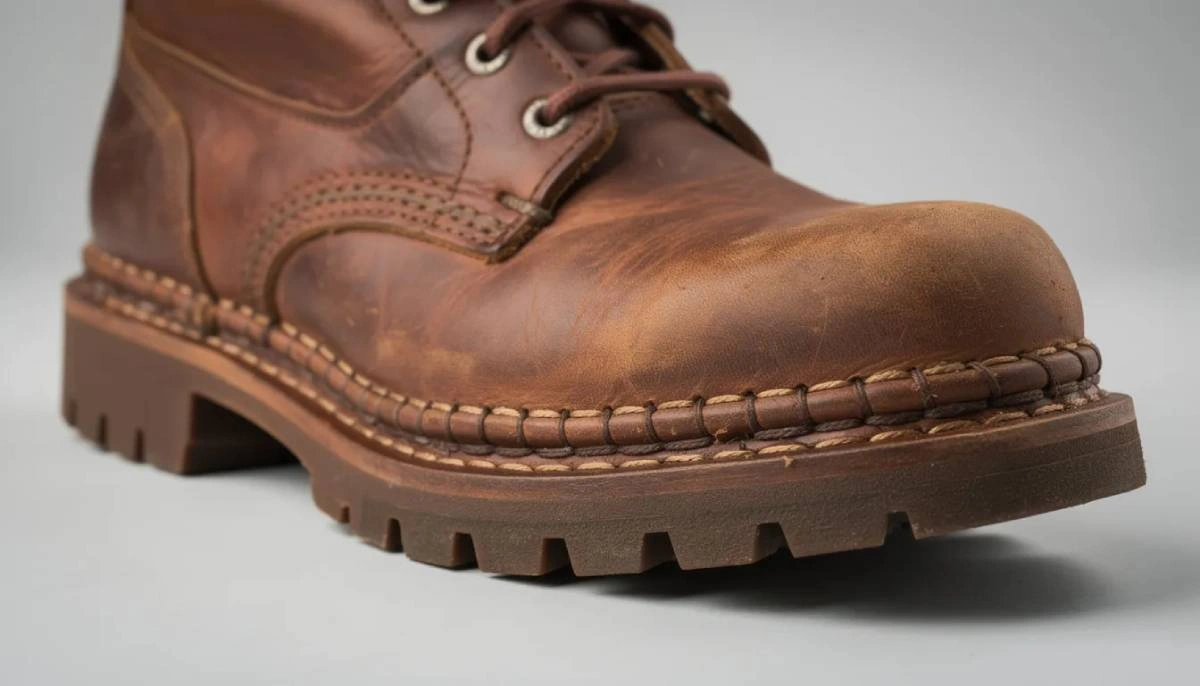
Leather goods manufacturing demands thread with high tensile strength, excellent abrasion resistance against hardware and material edges, good UV and chemical resistance (including sweat and oils), attractive seam appearance, and reliable performance when sewing through thick leather stacks.
Recommend Nylon 66 bonded nylon thread when:
- Sewing safety boots, work boots, hiking boots, heavy belts, tool pouches, motorcycle gear, saddlery, and premium leather bags
- Seams experience high tension, bending, and wear during normal use
- Thread forms part of load-bearing straps, handles, or attachment points
- Products carry extended warranties or premium brand positioning
Suggest Nylon 6 bonded nylon thread when: (for example, when using overlock needles)
- Producing fashion handbags, wallets, card holders, and casual shoes where aesthetics and cost matter more than extreme lifetime
- Stitch density is moderate and mechanical loads are lower, allowing Nylon 6 performance to meet requirements
- Products have shorter fashion cycles and moderate durability expectations
MH supplies both materials in contrasting and tonal colors suitable for decorative topstitching and logo details on leather products.
Outdoor and Marine Products
Outdoor and marine applications include tents, awnings, tarpaulins, backpacks, tactical gear, webbing straps, boat covers, and sail accessories. These products require resistance to UV exposure, moisture, temperature swings, and continual movement during use.
Recommend Nylon 66 bonded nylon thread when:
- Sewing high-stress webbing attachments, load-bearing straps, MOLLE systems, and climbing or tactical gear where maximum safety margin is essential
- Producing marine covers and outdoor structures expected to remain in service for many seasons under strong sun and repeated wet/dry cycles
- Applications involve structural seams that must maintain resilience under dynamic loads
Nylon 6 bonded nylon thread is suitable for:
- Medium-duty backpacks, day packs, rain covers, and outdoor accessories where loads are moderate and product life expectations are shorter
- Secondary seams such as lining attachments and internal pockets, used in combination with Nylon 66 for primary structural seams
- Cost-sensitive outdoor products with moderate performance requirements
For long-term UV exposure, both materials benefit from appropriate dye and finish systems. MH can supply outdoor-oriented bonded nylon thread with enhanced color fastness and weathering performance for demanding outdoor gear applications.
Upholstery and Automotive
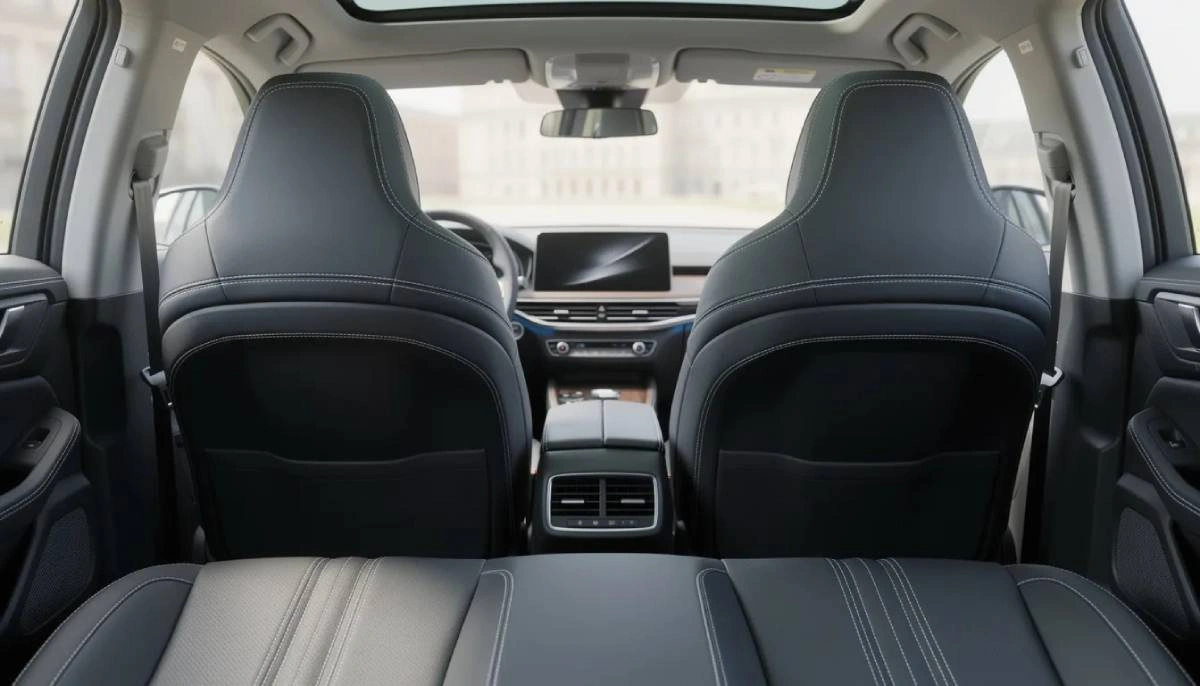
Upholstery and automotive applications demand strong, uniform seams in furniture upholstery, car seats, headrests, steering wheel covers, and interior trim. Key requirements include resistance to abrasion from daily use and stability under temperature changes common in vehicle cabins.
Recommend Nylon 66 bonded nylon thread for:
- Automotive seating, seat belt attachment reinforcements, truck and bus interiors, and public transport seating where long warranty periods and high safety standards apply
- High-end office chairs, cinema seating, and hotel furniture that must endure constant use and regular cleaning cycles
- Applications where seams are exposed to higher temperatures from sun exposure or proximity to heat sources
Suggest Nylon 6 bonded nylon thread for:
- Residential sofas, chairs, and decorative cushions where peak loads are lower and cost sensitivity is higher
- Non-critical interior details such as cushion covers, slipcovers, and decorative stitching that are not structurally loaded
- Budget-conscious furniture lines with standard durability requirements
MH can supply bonded nylon thread compatible with flame-retardant upholstery fabric systems, aligned with relevant customer specifications and automotive industry standards.
Apparel and General Sewing
For most standard garments, polyester sewing thread is the common choice. However, bonded nylon thread is specified for technical apparel, sports gear, protective clothing, and areas exposed to high friction or specific chemical environments.
Advise using Nylon 6 bonded nylon thread for:
- Sports bags, soft luggage, tactical apparel details, and fashion outerwear where flexibility and hand feel are important
- General industrial sewing where nylon is specified but extreme high-temperature exposure or heavy structural loads are not present
- Applications prioritizing cost efficiency with acceptable performance levels
Recommend Nylon 66 bonded nylon thread in apparel when:
- Sewing protective gear such as certain workwear categories, motorcycle apparel, and reinforced sportswear where seam integrity under stress is critical
- Constructing attachment points for helmets, pads, or harnesses integrated into garments
- Applications where seams must maintain performance under repeated impact and abrasion
As a full-range garment accessories supplier, MH can coordinate bonded nylon thread choices with matching zippers, webbing, and trims to ensure consistent performance across the finished product.
Summary Table: Nylon 66 vs Nylon 6 Bonded Nylon Thread
The following table provides a comparative overview of Nylon 66 versus Nylon 6 when used as bonded nylon sewing thread for industrial applications. Values shown are relative comparisons; exact specifications can be provided by MH according to customer ticket size requirements and testing standards.
| Property | Nylon 66 Bonded Thread | Nylon 6 Bonded Thread |
|---|---|---|
| Base Polymer | PA66 (polyamide 66) | PA6 (polyamide 6) |
| Typical Use | Heavy duty, critical seams, safety applications | General industrial, medium-duty applications |
| Tensile Strength | Higher (approximately 20% greater) | Standard |
| Heat Resistance | Higher (suitable for higher temperatures) | Moderate (adequate for standard sewing) |
| Abrasion Resistance | Higher (33% better cycle performance) | Moderate |
| Flexibility | Lower (stiffer, more rigid seams) | Higher (better drape and conformability) |
| Moisture Absorption | Lower (better dimensional stability) | Higher (may affect properties in wet conditions) |
| Dimensional Stability | Higher | Moderate |
| Processing Ease | Standard | Slightly easier |
| Relative Cost | Higher | Lower |
| Ideal Applications | Automotive seats, safety gear, heavy leather, marine, outdoor structural seams | Fashion bags, light upholstery, general industrial products, apparel |
How to Choose the Right Bonded Nylon Thread for Your Project
Selecting between Nylon 66 and Nylon 6 bonded nylon thread involves balancing performance requirements, process conditions, and cost constraints. The correct ticket size and thread construction are just as important as polymer type in achieving optimal results.
Follow this step-by-step decision framework when specifying thread for your production:
- Define end-use requirements
- Determine load levels the seam must withstand
- Estimate expected product lifetime and warranty periods
- Identify exposure to heat, UV, moisture, and chemicals
- Identify sewing conditions
- Document machine types and maximum sewing speeds
- Specify needle sizes and thread path configurations
- Measure material stack thickness and hardness
- Decide performance tier
- “Critical safety / long service life” applications → favor Nylon 66
- “Standard lifetime / cost-sensitive” applications → Nylon 6 may be suitable
- Select thread size
- Match Tex or ticket number to fabric thickness and seam strength targets
- Consider both topstitching visibility and structural strength requirements
- Confirm compliance
- Check required color fastness levels for the application
- Verify ecological standards (such as Oeko-Tex) if applicable
- Review any OEM or brand technical specifications
Involving MH’s technical team early in product development allows you to:
- Review sample materials and test seam constructions in your factory environment
- Receive optimized thread type and size recommendations for each operation (topstitching, structural seams, bartacks, decorative seams)
- Standardize thread specifications across multiple product categories to simplify sourcing and quality control
International garment, leather, and upholstery manufacturers can source bonded nylon thread and related sewing materials in bulk quantity from MH for consistent global production. Contact the MH team for sampling, technical data sheets, and application-specific recommendations.
FAQ: Bonded Nylon Thread, Nylon 66 vs Nylon 6
Is bonded nylon thread suitable for both lockstitch and chainstitch industrial sewing machines?
Yes, bonded nylon thread performs well on both lockstitch and chainstitch machines when properly tensioned. The bonding layer helps maintain thread integrity through the loopers and tension devices common in chainstitch configurations. For multi-needle chainstitchers running at high speed, ensure thread tension is balanced to prevent uneven stitch formation. Both Nylon 66 and Nylon 6 bonded threads are compatible with standard industrial equipment, though machine settings may need slight adjustment when switching between materials due to differences in stiffness.
How should bonded nylon thread (Nylon 66 and Nylon 6) be stored in a factory to maintain performance?
Store bonded nylon thread in a cool, dry environment away from direct sunlight and heat sources. Both Nylon 66 and Nylon 6 absorb moisture from the air, which can affect thread properties over time:
- Maintain relative humidity below 65% when possible
- Keep thread in original packaging until ready for use
- Rotate stock using first-in, first-out inventory management
- Store away from chemicals, solvents, and strong odors that could affect the bonding agent
Properly stored bonded nylon thread maintains its properties and sewing performance for extended periods.
Can bonded nylon thread be used outdoors without additional UV treatment?
Bonded nylon thread provides good short-to-medium-term outdoor performance, but for long-term exposure to intense UV radiation, additional considerations apply. Nylon naturally degrades under prolonged UV exposure, which can reduce tensile strength over several seasons. For applications requiring maximum UV resistance (such as marine covers expected to last 5+ years in direct sun), some manufacturers specify bonded polyester thread instead, as polyester offers inherently better UV stability. However, for many outdoor applications with moderate UV exposure or regular replacement cycles, bonded nylon—particularly Nylon 66—delivers excellent performance. MH can supply bonded nylon thread with UV-stabilized dye systems to enhance outdoor durability.
What thread sizes are most common for leather goods and upholography?
For leather goods and upholstery applications, the most commonly specified sizes include:
- Tex 70-90 (approximately Size 69): General leather goods, bags, wallets, light upholstery
- Tex 105-135 (approximately Size 92-138): Heavy leather, furniture upholstery, automotive seating
- strong>Tex 200-270 (approximately Size 207-277): Extra-heavy saddlery, industrial components, decorative topstitching on thick materials
Thread size selection depends on material thickness, needle size, desired seam appearance, and strength requirements. MH can recommend optimal size ranges based on your specific application and provide samples for sewing trials.
How does bonded nylon compare with bonded polyester thread for outdoor applications?
Bonded nylon and bonded polyester each have advantages for outdoor use:
| Factor | Bonded Nylon | Bonded Polyester |
|---|---|---|
| UV Resistance | Good (Nylon 66 better than Nylon 6) | Superior |
| Abrasion Resistance | Excellent | Very good |
| Strength | Higher | Slightly lower |
| Elasticity | Higher | Lower |
| Moisture Resistance | Good (Nylon 66 better) | Excellent |
For applications requiring maximum UV stability and exposure to prolonged sunlight over many years, bonded polyester may be preferred. For applications where abrasion resistance, elasticity, and strength under dynamic loads are priorities, bonded nylon—especially Nylon 66—remains the better choice. Many outdoor products use both materials strategically: Nylon 66 for structural and high-wear seams, polyester for UV-exposed decorative stitching.
For technical and purchasing teams seeking detailed specifications, sampling, or application-specific recommendations, contact MH directly to discuss your bonded nylon thread requirements.