 Whatsapp:
  Email: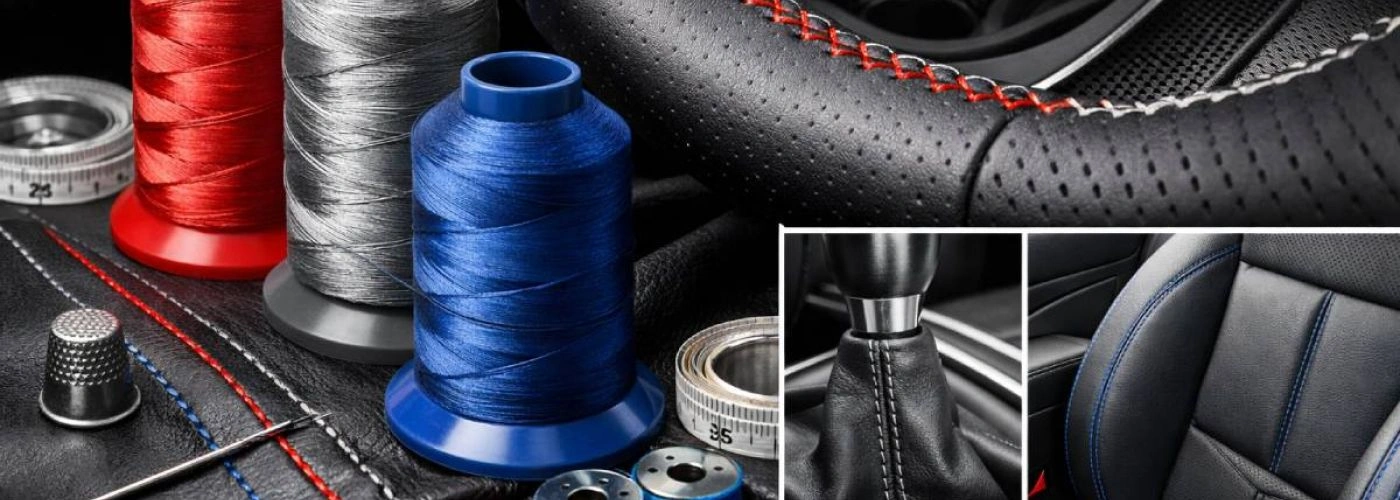
Automotive Interior Thread: UV-Resistant Solutions for Seats
Key Takeaways
- Automotive interior sewing thread is engineered for long-term UV exposure, abrasion, and cleaning cycles inside vehicles—not just generic polyester thread repurposed for auto use.
- UV resistant sewing thread is critical for car seats and trim to maintain color, seam strength, and appearance over 5–10+ years of real road use in diverse climates.
- MH supplies UV-resistant polyester and bonded polyester threads optimized for automotive interiors with consistent bulk supply and technical support for OEM and Tier 1 programs.
- Buyers should evaluate thread material, Tex/Ticket size, UV and colorfastness performance, and supplier traceability before nominating a thread for an automotive program.
- Request MH’s UV resistance data, color cards, and pre-production samples for your specific upholstery materials and seam constructions.


What Is Automotive Interior Sewing Thread?
Automotive interior sewing thread is industrial-grade thread specifically engineered for vehicle cabins. Unlike general-purpose sewing thread used in crafts or apparel, this product is designed to meet the demanding conditions inside cars, trucks, and SUVs—where sun exposure, passenger loading, and years of daily use create a performance environment that standard threads simply cannot handle.
This specialized thread is produced for high-speed industrial sewing on multi-needle seat lines and automated upholstery stations. It must remain stable under continuous vibration, thermal cycling, and repeated stress from passengers entering and exiting vehicles over 8–15 years of service life.
Key characteristics of automotive interior sewing thread include:
- Continuous filament polyester or bonded polyester construction
- Enhanced UV resistance and colorfastness to light
- High abrasion resistance for seat bolsters and armrests
- Low lint generation and smooth sewability for production efficiency
- Controlled tensile strength and elongation for seam durability
- Compatibility with standard automotive stitch types (double topstitch, French seam, decorative patterns)
From MH’s perspective as a vertically integrated manufacturer, we produce and supply UV-resistant sewing thread for automotive interiors in bulk cones. Our threads feature controlled tensile strength, elongation, and color shades suited to OEM and Tier 1 specifications, supporting customers who need reliable performance across global production facilities.
Common Thread Materials Used for Automotive Interiors
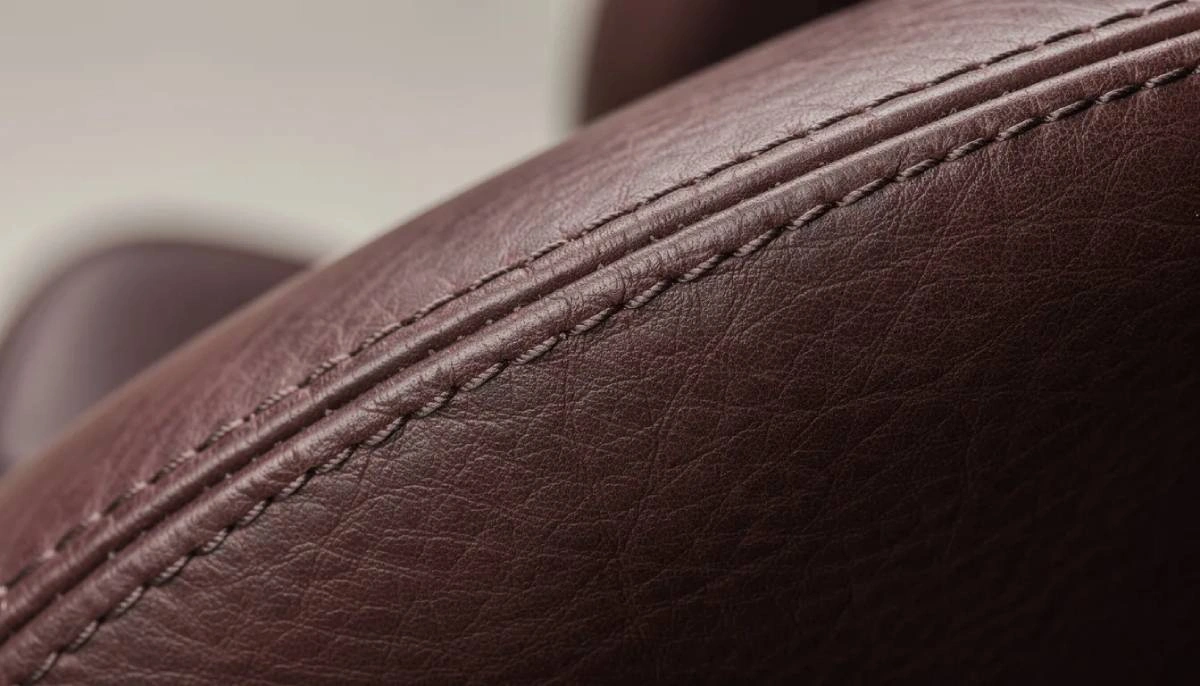
Automotive interior sewing thread is dominated by polyester-based materials, with nylon used selectively in specific applications. The choice of material directly impacts UV resistance, abrasion behavior, moisture performance, and cost—making material selection a critical procurement decision. Tex 70 is typically used for lighter, general trim, while Tex 90 or 135 is required for heavier materials like leather and vinyl seats to prevent seam splitting.
Polyester currently holds 70–80% market share in automotive upholstery thread, with UV-resistant variants growing approximately 15% annually as electric vehicle interior expansions increase demand for premium, durable trim solutions. In thread construction, manufacturers may add an extra twist to the thread to increase strength, prevent unlaying, and improve sewing tension, especially for demanding automotive applications.
UV-Resistant Polyester Thread
UV-resistant polyester thread is continuous filament polyester engineered with UV stabilizers and carefully selected dye systems to slow down degradation under sunlight. This thread offers:
- Good colorfastness to light
- Low moisture absorption (approximately 0.4% vs. nylon’s 4–8%)
- Dimensional stability across temperature cycles
- Cost-effectiveness for high-volume production
UV-resistant polyester thread for automotive interiors shares many qualities with outdoor thread used in applications like awnings, sails, tents, and boat covers—both are engineered for high UV resistance and durability. These properties make UV-resistant polyester perfect for demanding automotive interior applications where long-term color retention and seam strength are required.
Common Tex/Ticket ranges used in automotive interiors include:
| Application Type | Typical Tex Range | Ticket Equivalent |
|---|---|---|
| Hidden structural seams | Tex 27–40 | Ticket 80–120 |
| General upholstery | Tex 60–80 | Ticket 40–50 |
| Decorative topstitching | Tex 90+ | Ticket 30 or heavier |
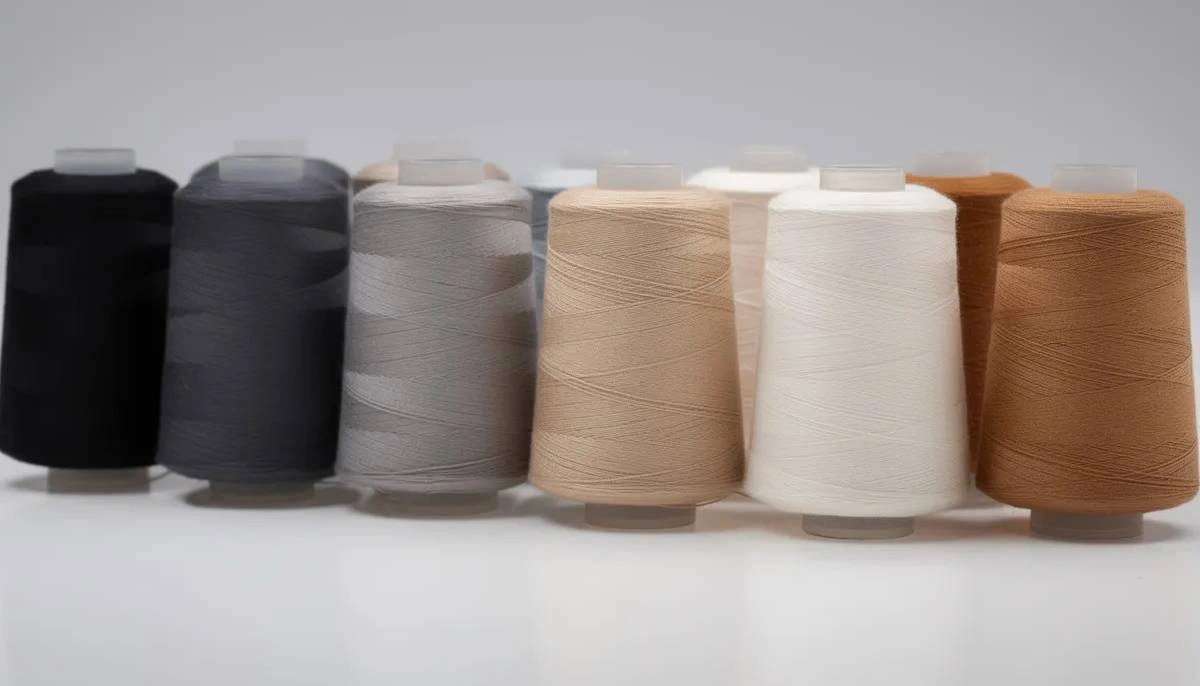
MH produces UV-resistant polyester threads in automotive-relevant color palettes including black, grays, beige, tan, and contrast stitching colors like red and orange. We maintain controlled shade tolerances across batches to support long production runs without visible color variation.
Bonded Polyester Thread
Bonded polyester thread consists of polyester filaments that are bonded together with a specialized finish to improve abrasion resistance, reduce fraying, and enhance performance in multi-layer seams.
Key advantages of bonded polyester include:
- Resistance to needle heat at high sewing speeds
- Skip-free stitching through thick materials
- Improved durability under repeated flexing
- Enhanced seam strength in high-use areas
Bonded polyester is often selected for thicker upholstery materials and synthetic leather (PU, PVC) where seam strength and resistance to rubbing against clothing are critical. It outperforms standard multifilament by 20–50% in abrasion tests using methods like the Wyzenbeek test.
MH supplies bonded UV resistant sewing thread in bulk cones optimized for automotive upholstery thread applications. Our bonding and lubrication are tailored for high-speed industrial machines, ensuring consistent performance on seat lines and programmable pattern sewing equipment.
Nylon vs Polyester (and Why Polyester Is Preferred for Interiors)
Both nylon and polyester are strong synthetic fibers, but they behave differently under automotive interior conditions:
| Property | Polyester | Nylon |
|---|---|---|
| UV resistance | Superior | Degrades faster under UV light |
| Moisture absorption | Low (0.4%) | Higher (4–8%) |
| Colorfastness | Excellent | Good, but more susceptible to fading |
| Initial tensile strength | High | Higher initial strength |
| Elasticity | Moderate | Higher elasticity |
| Visible interior seams, sun-exposed areas | Hidden structural seams, indoor applications |
Nylon can have higher initial strength and elasticity but tends to degrade faster under UV exposure and absorbs more moisture, which may affect dimensional stability and dye performance over time.
Most modern automotive upholstery thread for visible interiors is polyester-based. Nylon threads may still be used in some hidden structural seams or specific components not exposed to sunlight.
Procurement teams should confirm with their supplier whether any nylon is present in proposed constructions for sunlight-exposed trim parts.
Key Performance Requirements for Automotive Interior Thread
Automotive interior sewing thread must meet multiple performance criteria simultaneously. A thread that excels in one area but fails in another will create problems for manufacturing efficiency, warranty claims, or long-term customer satisfaction.
The key requirements include:
- UV resistance and colorfastness for visible seams
- Abrasion resistance for high-contact areas
- Tensile strength and seam durability
- Low shrinkage and dimensional stability
- Consistent dye lots and shade matching
- Smooth sewability and low lint generation
UV Resistance and Colorfastness
UV resistance refers to the thread’s ability to retain strength and flexibility after prolonged exposure to sunlight. Colorfastness measures the retention of original shade under the same conditions.
High-quality automotive threads often achieve lightfastness ratings of 6–8 on the blue wool scale, though specific results vary by color. Light-sensitive shades like red, yellow, or bright orange require extra attention during specification.
Recommendations for procurement teams:
- Request comparative UV aging data for target colors
- Specify minimum acceptable colorfastness to light ratings
- Require supplier to maintain the same dyeing route throughout the vehicle program
- Include UV resistance requirements early in RFQs
MH uses UV-stabilized polyester and selective dyestuffs to support higher retention of strength and color under typical automotive interior exposure conditions.
Abrasion Resistance (Seat Seams and Armrests)
Seat bolsters, armrests, and center consoles are exposed to continuous rubbing from clothing, bags, and safety belts. This creates risk of thread wear and breakage if abrasion resistance is insufficient.
Testing should be done on full seam constructions (fabric + thread) rather than thread alone to get realistic results. Bonded polyester threads or higher-denier UV-resistant polyester are recommended for areas with expected high abrasion.
MH can advise on thread size and bonding levels that balance abrasion resistance with desired stitch appearance and production efficiency. Buyers should define minimum abrasion resistance requirements when sourcing automotive upholstery thread.
Tensile Strength and Seam Durability
Tensile strength of the thread and seam efficiency together determine whether a seam will withstand long-term loading from seat foam compression, passenger movement, and restraint system forces.
Thread selection should consider:
- Single-end breaking strength (Tex 90 bonded polyester typically achieves 40–50 lbs)
- Performance in multi-row seams as defined by the vehicle’s interior engineering team
- Compatibility with existing seat and trim validation tests
MH provides typical tensile ranges for our UV resistant polyester and bonded polyester threads in common Tex sizes. We encourage buyers to coordinate with their design and testing teams to align thread strength requirements with existing validation tests.
Typical Automotive Interior Applications
UV-resistant sewing thread is used across virtually all visible and structural seams inside a vehicle. Each application may require different Tex sizes and constructions, but the same base thread family can often cover multiple components—simplifying sourcing and inventory management.
In addition to sewing thread, automotive upholstery projects often use fasteners such as hook & loop (Velcro) and zippers for assembly and attachment of interior components.
Car Seats
Car seats are the primary application for automotive interior sewing thread, including seams in:
- Seat cushions and backrests
- Headrests
- Side bolsters
- Armrests integrated into seats
Visible decorative topstitching (contrast or tonal) on seats demands high UV resistance and colorfastness, while structural seams require high tensile strength and seam efficiency.
Thread size recommendations:
- Finer Tex (27–40) for hidden structural seams
- Heavier Tex (90+) for double topstitching or ornamental seams
- Medium Tex (60–80) for general assembly seams
MH supplies UV-resistant polyester and bonded polyester threads selected for different seat zones, helping customers standardize across multiple seat models and trim levels within the same vehicle platform.
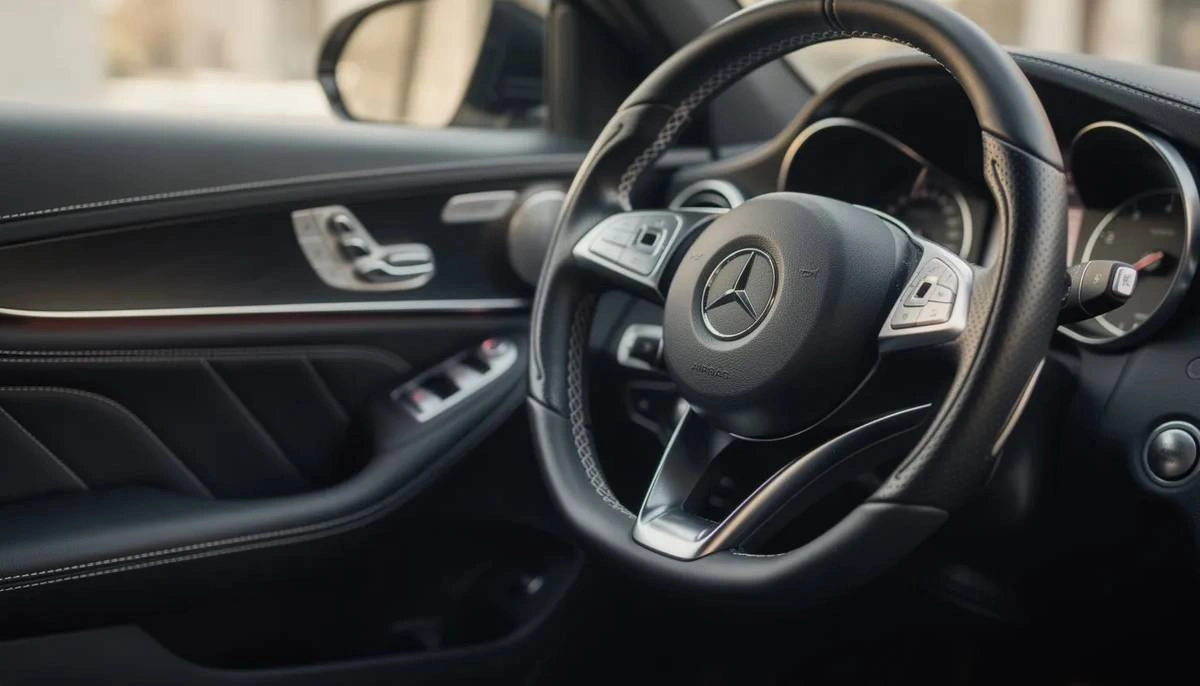
Steering Wheel Covers
Steering wheel covers experience constant hand contact, sweat, oils, and sunlight through the windshield. Both abrasion resistance and UV resistance are critical for this application.
Decorative stitching on steering wheels is highly visible and often used as a design signature (e.g., contrast colors). This requires stable color and precise seam appearance over many years of use.
Recommended specifications:
- Bonded polyester threads in medium to heavy Tex sizes
- UV-resistant formulations for color stability
- Optimized lubrication for tight curves and heavy leather materials
If you are experiencing bunched up fabric, see these tips for smooth sewing results.
MH provides UV-resistant bonded polyester specifically suited for leather and synthetic leather steering wheel wraps.
Armrests and Consoles
Center armrests, door armrests, and console lids combine high contact frequency with exposure to sunlight through side windows and sunroofs. Thread must resist flattening, fraying, and color shift as occupants rest elbows or place objects on these surfaces daily.
UV-resistant bonded polyester or robust UV-resistant polyester threads are recommended for these components, coordinated in color with seat and door panel stitching.
MH helps customers harmonize thread choices for all armrest and console variants within a vehicle line, ensuring consistent durability and appearance.
How Buyers Choose the Right UV-Resistant Thread
Choosing automotive interior sewing thread involves more than selecting “polyester.” Buyers must match thread size, construction, and color to individual upholstery materials and seam types to achieve optimal results.
Correct thread selection supports long-term durability, appearance, and manufacturing efficiency. Poor selection can lead to seam failures, visible quality issues, or production line problems.
Buyers may also be required to create an account on the supplier's website to place orders, track deliveries, and access technical support for automotive upholstery supplies.
Thread Size Selection (Tex/Ticket Ranges)
Thread size affects seam strength, visual prominence, and compatibility with needle sizes and stitch density. Common ranges used in automotive interiors include:
| Component | Recommended Tex | Application Notes |
|---|---|---|
| Hidden seams | Tex 27–40 | Lower visibility, structural function |
| General upholstery | Tex 60–80 | Balance of strength and appearance |
| Decorative topstitching | Tex 90+ | Bold visual presence, contrast colors |
Buyers should confirm that thread sizes are compatible with existing needle inventories and machine capabilities across all production plants. MH can recommend appropriate Tex/Ticket combinations for each interior component based on customer durability and design targets.
Matching Thread to Upholstery Materials
Different upholstery materials place different stresses on thread:
- Woven fabric: Generally easier to sew, moderate needle heat
- Genuine leather: Can have sharp edges that cut thread
- PU/PVC synthetic leather: Higher needle heat, requires lubricated threads
- Laminated composites: Multiple layers require stronger threads
Polyester or bonded polyester is recommended for synthetic leather and leather surfaces exposed to sunlight, given polyester’s UV stability and low moisture absorption.
MH can study customer material samples and propose UV-resistant sewing threads optimized for specific constructions, including appropriate lubrication and size.
Stitch Types and Seam Appearance Considerations
Automotive interiors use various stitch constructions—single needle lockstitch, double topstitch, French seams, decorative patterns. Thread choice affects seam bulk and line definition.
Visible decorative seams often use heavier threads in contrasting colors, requiring careful control of stitch balance and tension to avoid puckering or irregular topstitch lines.
Buyers and designers should align on target visual effects before specifying thread type and color:
- Subtle tonal matching
- Bold contrast statements
- Matte vs. slight sheen finish
MH provides color cards and sewn sample panels showing how different threads and stitch types appear on typical automotive materials.
Supplier Considerations for Automotive Programs
For automotive interior sewing thread, supplier capability is as important as thread specification. Long program lifecycles (often 5–8 years per vehicle generation) and strict quality expectations require suppliers who can deliver consistent performance over time.
As a vertically integrated garment accessories and thread manufacturer, MH focuses on stable quality, scalable capacity, and export logistics suitable for global automotive customers.
Batch Consistency and Traceability
Automotive programs may run for many years, so thread shade, strength, and finish must remain consistent across numerous production lots and potentially multiple plants.
Buyers should require:
- Lot traceability from raw material through dyeing, winding, and final packing
- Clear labeling on cones and cartons
- Retention samples for ongoing comparison
- Periodic audits against initial approval samples
MH maintains batch records and internal quality controls to support traceability and consistent performance of automotive interior sewing threads.
Support for Long Production Runs
Automotive interiors require large and predictable volumes of thread, often across multiple global production locations. Supply continuity is critical to avoid production interruptions.
Suppliers must have:
- Adequate manufacturing capacity
- Forecasting communication systems
- Safety stock arrangements
- Ability to scale for model year changes
MH’s multiple factories and large-scale thread production allow us to support long-running automotive programs with steady supply in bulk packaging. We encourage buyers to discuss volume forecasts, ramp-up schedules, and potential platform facelifts when choosing a supplier.
Sample Approval and PPAP-Style Expectations
While specific PPAP or OEM qualifications vary by customer, automotive buyers typically require structured sample approvals and documentation for new sewing threads.
Typical requirements include:
- Pre-production sample cones in target sizes and colors
- Basic test data (strength, elongation, colorfastness, UV aging results)
- Stability checks across several lots before full nomination
- Process capability documentation
MH supports these technical discussions, supplying data and samples so customers can validate performance within their own test frameworks.
Contact us for automotive interior thread specifications or to arrange pre-production sample evaluations.
Lead Times, Packaging, and Logistics Support
Predictable lead times and packaging formats suited to automotive plants are essential for smooth operations. Key considerations include: For those involved in selecting materials for automotive manufacturing, understanding the different types of threads can also be critical.
- Standard and peak-season lead times
- Minimum order quantities by color and Tex size
- Options for regional warehousing or buffer stock
- Large cone formats (5000m+) with clear labeling
- Palletization compatible with automotive plant receiving
MH offers export-ready packaging for UV resistant sewing thread, optimized for container shipping and warehouse handling for B2B customers. Clear documentation (packing lists, lot numbers, color codes) supports efficient receiving and traceability in automotive supplier systems.
UV-resistant polyester and bonded polyester are generally preferred over nylon for visible interior seams due to superior UV stability and colorfastness. MH supplies both thread types optimized for automotive upholstery applications.
