 Whatsapp:
  Email: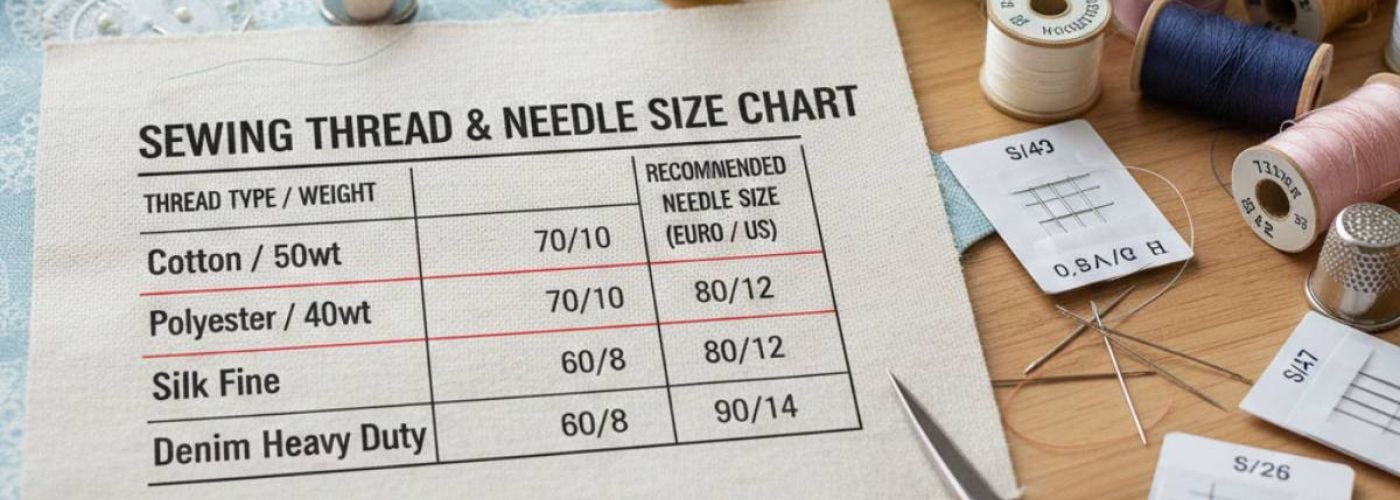
Sewing Thread Needle Size Chart: A Complete Technical Guide for Professional Buyers
Choosing the correct needle size for a specific sewing thread is critical for achieving high-quality seam performance, preventing thread breakage, and maintaining production efficiency. This guide will help readers understand the different types of thread and fabric, and how to select the right combination for their project. The needle eye must accommodate the thread size properly to avoid sewing issues such as fraying, skipped stitches, or fabric damage. This guide provides a systematic overview of how thread size (Tex, Ticket No., Metric Count) corresponds to the recommended needle size in industrial sewing applications. The included chart is helpful for selecting the correct needle and thread combination, and it simplifies the process of figuring out the correct needle and thread sizes for various sewing applications. The chart references reputable manufacturers who follow standardized sizing systems, commonly known as the needle system, which includes both Metric (NM) and US/Singer sizing methods. This article serves as a course or structured guide for professional buyers seeking to improve their knowledge of sewing thread and needle selection. For more factors to consider when selecting thread, refer to additional resources.
Before starting a project, always check the compatibility between your chosen needle and thread sizes to ensure smooth sewing and optimal results.
Understanding Thread and Needle Compatibility
Why Matching Thread and Needle Matters
A proper thread–needle match ensures:
- Stable stitches without skipped stitches
- Reduced friction and heat between needle and thread
- Lower risk of thread fraying or breakage
- Consistent seam appearance and integrity
- Extended machine and needle lifespan
- Reduced risk of fabric damage, such as tearing or skipped stitches
Matching the right needle and thread is essential to achieve the best results for any sewing project.
Incorrect needle size leads to problems such as tension imbalance, bird-nesting, seam puckering, and frequent machine stoppages.
How Needle Sizes Are Measured
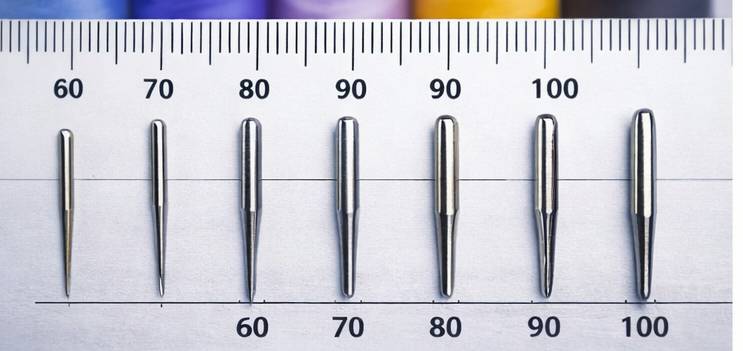
Industrial sewing needles are commonly measured in two systems:
| System | Description |
|---|---|
| Nm (Number Metric) | Needle diameter in hundredths of a millimeter. The needle size refers to the diameter of the shaft. For example, a size 80 needle has a shaft diameter of 0.80 mm. |
| Singer Size | Traditional American sizing system. |
Conversion Example: Nm 80 ≈ Singer Size 12. The higher the number on a sewing machine needle, the thicker the needle.
The needle system refers to the standardized methods for sizing sewing machine needles, including the Metric (NM) system created in the 1940s and the US or Singer systems. Manufacturers may also use color codes to differentiate needle types. Understanding needle types and their sizing is important for selecting the correct needle, ensuring quality sewing, and preventing issues like fabric bunching or damage.
The 40–50% Needle Eye Occupancy Principle
In industrial sewing:
The thread should occupy about 40–50% of the needle’s eye diameter.
This ensures smooth passage without excessive friction. The groove of the needle helps guide the thread and accommodates it during stitching, which helps prevent breakage.
Sewing Thread and Needle Size Chart (By Tex, Ticket Number)
Below is a comprehensive chart aligning MH sewing thread specifications with recommended needle sizes. The chart covers polyester spun thread, core-spun thread, and filament thread. It includes a range of thread sizes and fabric weights for various sewing applications, helping you select the right needle and thread combination for optimal results. The chart takes into account both fabric weight and thread weight, so you can match the appropriate needle, thread, and fabric for your project. For heavy-duty projects like upholstery or canvas, using a thicker thread is recommended for added strength and durability. Weight refers to both the thread and the fabric, and matching their weights is important to achieve the best sewing results. Testing on scraps is always a good idea when choosing a needle for a project.
Light to Medium Fabrics
| Thread Size | Tex | Ticket No. | Recommended Needle Size |
|---|---|---|---|
| Fine threads | Tex 18–Tex 30 | Tkt. 180–120 | Nm 60/8 – Nm 70/10 |
| Lightweight apparel | Tex 30–Tex 40 | Tkt. 120–100 | Nm 70/10 – Nm 75/11 |
Note: For lightweight fabrics such as chiffon or silk, it is important to use a smaller needle size to ensure smooth stitching and prevent fabric damage.
General Apparel Applications
| Thread Size | Tex | Ticket No. | Recommended Needle Size |
|---|---|---|---|
| Standard garment thread | Tex 40–Tex 50 | Tkt. 100–80 | Nm 75/11 – Nm 90/14 |
| Medium thickness seams | Tex 50–Tex 60 | Tkt. 80–60 | Nm 90/14 |
Heavy Fabrics and Workwear
| Thread Size | Tex | Ticket No. | Recommended Needle Size |
|---|---|---|---|
| Denim and uniforms | Tex 60–Tex 75 | Tkt. 60–50 | Nm 90/14 – Nm 100/16 |
| Canvas and bags | Tex 75–Tex 90 | Tkt. 50–40 | Nm 100/16 – Nm 110/18 |
Note: Heavier fabrics such as denim, canvas, and leather require larger needle sizes to ensure proper stitching and prevent damage.
Heavy-Duty Products and Leather
| Thread Size | Tex | Ticket No. | Recommended Needle Size |
|---|---|---|---|
| Leather goods | Tex 90–Tex 135 | Tkt. 40–20 | Nm 110/18 – Nm 130/21 |
| Footwear, upholstery | Tex 135–Tex 180 | Tkt. 20–15 | Nm 130/21 – Nm 160/23 |
| Technical textiles | Tex 210+ | Tkt. 10 or thicker | Nm 180/24+ |
Needle Type Selection Based on Fabric and Thread
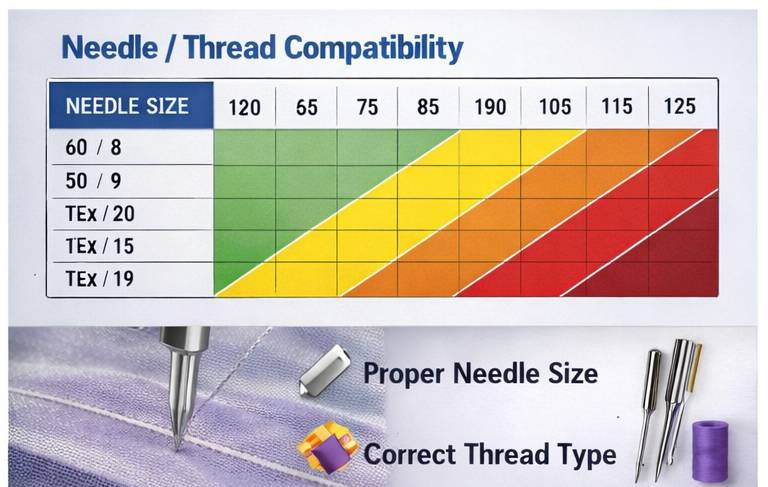
Selecting the sewing machine needle type suited to your fabric and thread is essential for quality results. There are different types of sewing machine needles, each designed for specific fabrics and threads. Understanding the different types of needles is essential for selecting the correct one for your project. Different needle point types enhance stitch quality on specific fabrics.
Common Industrial Needle Points
Selecting the correct needle type is crucial for optimal sewing results. Ballpoint needles, in particular, are essential for knits and stretch fabrics as they prevent fabric damage and skipped stitches.
| Needle Point Type | Application |
|---|---|
| R (Round Point) | Woven fabrics, general applications |
| SES (Small Ball Point) | Knits and light stretch fabrics (ballpoint needles for delicate knits) |
| SUK (Medium Ball Point) | Coarse knits, elastic fabrics (ballpoint needles for heavier stretch materials) |
| LR (Leather) | Leather, creates a slanted decorative stitch |
| LL / DI (Diamond Point) | Thick leather, high penetration |
Guidelines for Needle Type Selection
- Use ball point needles for knitted materials to avoid damaging yarn loops.
- Use sharp points (R) for woven fabrics to penetrate tightly woven structures.
- Use leather points (LR, LL, DI) for leather to produce clean stitch holes.
For any sewing project, always check if your needle is bent and replace it as needed to ensure optimal stitching results.
Troubleshooting Thread–Needle Mismatch
Thread Breaking
Possible Causes:
- Needle too small
- Needle eye too sharp or burred
- Wrong thread material for the fabric
Solution: Increase needle size or switch needle type.
Skipped Stitches
Possible Causes:
- Needle too large
- Incorrect needle point type
- Thread tension incorrect
Solution: Adjust needle size or use SES/SUK for knits.
Seam Puckering
Possible Causes:
- Thread too thick for fabric
- Needle too large
- Tension imbalance
Solution: Select a finer thread and smaller needle.
Summary
Selecting the correct needle size for a given sewing thread is essential for maintaining seam quality, minimizing production issues, and achieving consistent performance in industrial sewing. Using the Tex system together with MH’s Ticket Number guidelines ensures accurate matching across different materials and fabric types.
