 Whatsapp:
  Email:
Sewing Thread Tensile Strength: A Complete Guide for Industrial Buyers
What Is Thread Tensile Strength?
Thread tensile strength refers to the maximum pulling force a sewing thread can withstand before breaking when subjected to tension along its length. Tensile strength is determined by the force required to break a thread when it is pulled from its original length. For industrial sewing thread, tensile strength is a core performance indicator that directly affects seam durability, production efficiency, and end-product quality.
Tensile strength is usually measured in grams, kilograms, or centinewtons (cN), and a higher tensile strength means more weight is needed to break the thread. Unlike decorative or household threads, industrial sewing threads are designed to maintain stable tensile strength under high-speed sewing, continuous mechanical stress, and repeated washing or abrasion.
Why Tensile Strength Matters in Industrial Sewing Applications
In industrial manufacturing, insufficient thread tensile strength can lead to:
- Frequent thread breakage during high-speed sewing
- Weak or unstable seams in finished products
- Reduced production efficiency and increased machine downtime
- Higher defect rates and after-sales quality issues
Choosing the correct tensile strength ensures that the thread performs reliably throughout the entire product lifecycle, from sewing to end use.
How Thread Tensile Strength Is Measured
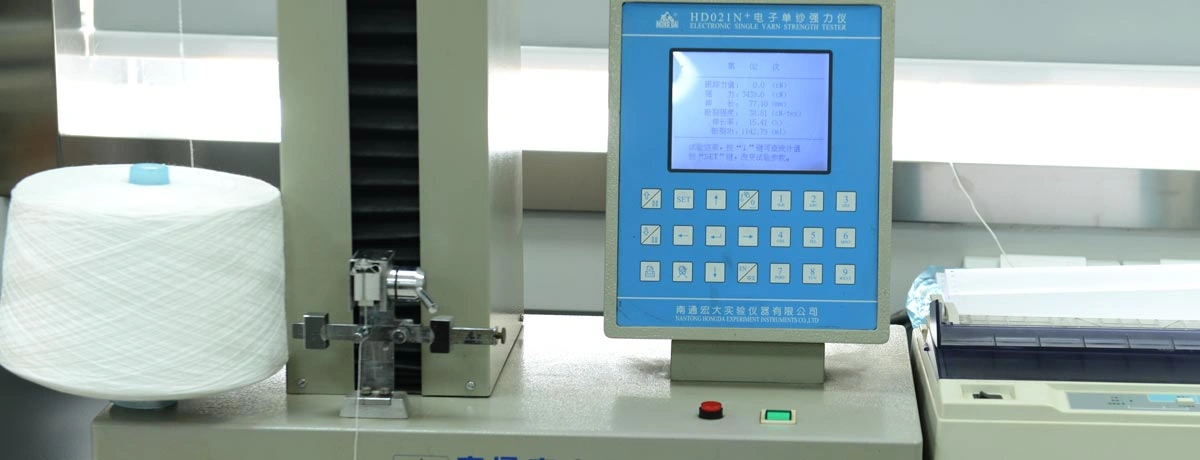
Thread tensile strength is measured using standardized laboratory testing methods, where a single strand of thread is stretched at a constant speed until it breaks.
Measuring thread strength involves assessing both its tensile strength and loop strength. Loop strength refers to the force required to break a looped segment of thread, providing insight into the thread’s resistance to breaking when looped back onto itself and its overall stitch and seam strength in practical applications.
Common International Standards
- ISO 2062 – Determination of breaking force and elongation
- ASTM D2256 – Standard test method for tensile properties of yarns
- GB/T textile testing standards (China)
Common Units
- Newton (N)
- Centinewton (cN)
- Grams-force (gf)
The test result reflects the breaking force, often evaluated together with elongation at break.
Key Factors Affecting Thread Tensile Strength
1. Raw Material Type
Different fibers naturally exhibit different strength levels:
- Polyester sewing thread: High strength, excellent stability, widely used in industrial sewing
- High-tenacity filament thread: Superior tensile strength for heavy-duty applications
-
Cotton thread: Lower tensile strength, mainly for light-duty or specialty uses. Cotton threads are derived from the cotton plant and are known for their absorbency and softness.
Cotton threads are generally weaker than polyester threads due to the raw material used.
- Mercerized cotton: A treated, high-quality cotton thread with enhanced strength, increased luster, and better dye absorption compared to regular cotton thread.
Synthetic threads generally offer better durability and abrasion resistance compared to natural fibers like cotton.
2. Thread Size (Tex / Ticket Number)
Thread tensile strength increases as thread size increases, and thread size is determined by its linear density, which measures the thickness of the thread and influences both strength and performance:
- Lower Tex / higher ticket number → finer thread, lower linear density, lower breaking force
- Higher Tex / lower ticket number → thicker thread, higher linear density, higher breaking force
Correct sizing is critical to balance seam strength and fabric compatibility.
3. Thread Construction (Ply Structure)
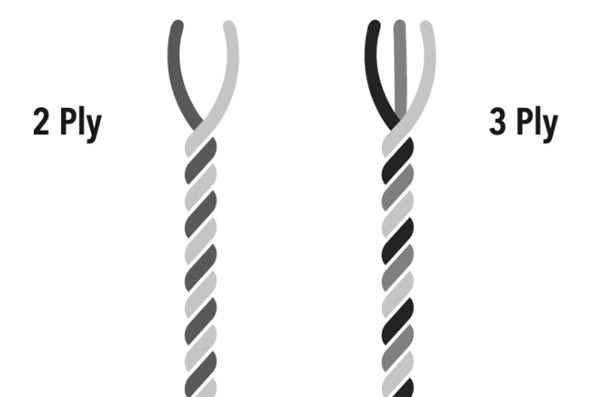
- Single-ply threads generally offer lower tensile strength
- Multi-ply threads (2-ply, 3-ply) provide higher strength and better load distribution
Ply structure also affects sewing stability and consistency.
4. Twist Level
- Proper twist improves fiber cohesion and tensile performance
- Excessive twist may reduce effective strength and flexibility
Industrial sewing threads are engineered with optimized twist levels for strength and sewability.
5. Finishing and Treatment
Processes such as:
- Heat setting
- Lubrication
- Surface smoothing
help maintain tensile strength during high-speed sewing and reduce friction-related breakage.
Good Sewability and Thread Properties
Good sewability is essential for achieving strong seams and a smooth sewing experience, especially in industrial applications where efficiency and quality are paramount. Sewability is primarily determined by key thread properties such as thread strength, elongation, and abrasion resistance. Thread strength, measured by tensile strength, indicates how much force a thread can withstand before it breaks. This is crucial for ensuring that the thread performs reliably during high-speed sewing and in finished products.
Elongation is another important property, reflecting how much a thread can stretch before breaking. Threads with the right amount of elongation can absorb stress during sewing and use, preventing seam failure and thread breakage. Abrasion resistance, meanwhile, determines how well a thread can withstand repeated friction, which is especially important for seams that experience frequent movement or washing.
Different thread types offer varying levels of these properties. For example, cotton thread is valued for its natural feel but generally has lower abrasion resistance compared to polyester thread, which is known for its durability and strength. Spun threads, core spun threads, and textured filament threads each bring unique characteristics to the table, affecting how the thread handles during sewing and how it performs in the finished seam.
Selecting the appropriate thread for your specific sewing applications means considering these properties in relation to the fabric and end use. By understanding how thread strength, elongation, and abrasion resistance contribute to good sewability, manufacturers can ensure that their seams are strong, their threads perform reliably, and their products meet the highest standards of quality.
Abrasion Resistance and Thread Longevity
Abrasion resistance plays a pivotal role in determining the longevity of sewing threads, particularly in demanding, heavy-duty applications such as outdoor gear and camping equipment. Threads that offer high abrasion resistance, like those made from synthetic fibers such as polyester and nylon, are designed to withstand the constant friction and wear that come with frequent use and exposure to harsh environments. This makes them the best thread choice for projects where durability is non-negotiable.
In contrast, cotton thread, while excellent for certain applications, typically has lower abrasion resistance and is better suited for lighter, less demanding sewing projects. The manufacturing process, including factors like twist direction and thread weight, also influences abrasion resistance. Thicker threads generally provide greater resistance to abrasion than finer threads, making them ideal for heavy duty seams that must endure significant stress.
Thread construction further impacts performance. Corespun thread and bonded thread are engineered to maximize both thread strength and abrasion resistance, ensuring that the thread can withstand the rigors of industrial sewing and extended use. By carefully selecting the right thread type and weight for each application, manufacturers can enhance the durability and lifespan of their products.
Understanding the relationship between thread strength, elongation, and abrasion resistance is key to choosing the appropriate thread for any sewing application. Whether you are sewing camping equipment, outdoor gear, or any project that demands long-lasting performance, prioritizing abrasion resistance will help ensure your seams remain strong and your products stand the test of time.
Typical Tensile Strength Ranges of Industrial Sewing Threads
| Thread Type | Typical Tensile Strength Range |
|---|---|
| Polyester spun thread (Tex 30–75) | ~800–2500 cN |
| Core-spun sewing thread | ~1700–3000 cN |
| High-tenacity filament thread | ~1500–9000 cN |
Actual performance depends on exact specification, construction, and application.
Tensile Strength vs Elongation: Finding the Right Balance
High tensile strength alone is not enough.
Industrial sewing threads must also provide controlled elongation to absorb stress during sewing and use.
- Too low elongation → thread breaks easily
- Too high elongation → seams may deform
Threads with lower elongation are ideal for stable seams that require minimal stretch, while threads with outstanding elongation, such as certain high-quality polyester threads, provide greater flexibility and are preferred for stretch seams. The original length of the thread serves as the baseline for testing, and the percentage increase in length during testing indicates the thread's elongation capacity. Additionally, the choice of stitch type also influences seam elasticity and elongation.
A well-balanced thread offers high breaking force with stable elongation, ensuring durable seams without compromising appearance.
How to Choose the Right Tensile Strength for Your Application
Light to Medium Apparel
- Shirts, trousers, fashion garments
- Medium tensile strength polyester threads
Industrial & Technical Sewing
- Bags, safety textiles, industrial covers
- High-tenacity filament threads with high breaking force
Home Textiles
- Upholstery, bedding, curtains
-
Strong and abrasion-resistant threads are required, as home textiles like upholstery are often subject to high stress and significant wear and tear. For these applications, choosing sewing thread with high tensile strength and durability is essential.
Denim and Workwear
- Jeans, uniforms, heavy fabrics
- Core-spun or higher-strength polyester threads
When sewing denim, leather, or other heavyweight fabrics, it is essential to use high tensile strength threads—often with a polyester core—to prevent seam snaps caused by the weight and tension of these materials.
Common Problems Caused by Incorrect Tensile Strength
- Thread breakage during sewing
- Inconsistent seam appearance
- Reduced seam durability after washing
- Increased machine stoppages
These issues are often the result of mismatched thread tensile strength, not machine defects.
Industrial Sewing Thread Tensile Strength at MH
MH industrial sewing threads are designed with:
- Carefully selected raw materials
- Optimized ply and twist structures
- Strict tensile strength testing under international standards
This ensures consistent breaking force, stable sewing performance, and reliable seam durability across a wide range of industrial applications.
Conclusion
Thread tensile strength is a fundamental performance parameter for industrial sewing threads.
Understanding how it is measured, what affects it, and how to select the correct strength helps manufacturers achieve efficient production, stable quality, and long-lasting seams.
