 Whatsapp:
  Email:
 Thread Size Chart: Sewing Thread Specifications
Selecting the correct sewing thread specification is essential for professional buyers in the manufacturing industry. A clear understanding of Tex, Ticket Number (Tkt.), and Metric Count (Nm) ensures that the chosen thread is compatible with production needs while remaining cost-effective.
It is important for buyers to find the correct thread size and specification to meet their specific production requirements.
Specification Systems: Tex, Denier, and Metric Counts
Global sewing thread specifications are typically classified into two systems: the Direct System (fixed length) and the Indirect System (fixed weight). Different countries may use different thread specification systems, so understanding these regional differences is important when selecting the appropriate standard.
Direct System (Fixed Length): Tex and Denier
The Direct System is the internationally recommended standard. In this system, a larger number indicates a coarser thread.
| Specification | Definition | Formula | Notes |
|---|---|---|---|
| Tex | Weight in grams of 1,000 meters of yarn | Tex = W(g) / L(km) | ISO-recommended |
| Denier | Weight in grams of 9,000 meters of filament yarn | Denier = W(g) / L(9km) | Common for filament yarn |
Conversion: 1 Denier ≈ 0.11 Tex
Indirect System (Fixed Weight): Metric Count (Nm)
Under the Indirect System, a larger number indicates a finer thread (also referred to as 'fine thread' sizes in metric thread specifications).
| Specification | Definition | Notes |
|---|---|---|
| Metric Count (Nm) | Length in meters of yarn weighing 1 gram | Common in Europe, mainly for spun yarns |
Ticket Number (Tkt.) – The Commercial Reference
The Ticket Number is a commercial designation used by manufacturers to simplify ordering.
- =Generally corresponds to the metric count, with adjustments for needle-size compatibility.
- May vary slightly among manufacturers.
- Reliable comparisons can only be made within the same brand (e.g., MH Thread).
Minor Diameter and Thread Measurement
The minor diameter, often referred to as the root diameter, is a fundamental measurement in thread specifications. In the context of the ISO metric screw thread system, the minor diameter represents the smallest diameter of the thread, measured at the base or root of the thread profile. This dimension is typically measured in millimeters (mm) and plays a crucial role in determining the overall strength and load-bearing capacity of threads, especially in bolts and nuts.
Accurate measurement of the minor diameter is essential for ensuring that threads can withstand the required tension and shear forces in demanding applications. Specialized gauges, such as thread depth micrometers or optical profile projectors, are commonly used to achieve the necessary accuracy. Both the major diameter (the largest diameter of the thread) and the minor diameter must be measured to verify that the thread meets the required specifications and tolerances.
Fine threads, in particular, demand precise measurement of the minor diameter to maintain the integrity of the connection and prevent issues such as stripping or failure under load. By adhering to proper measurement techniques and using calibrated tools, manufacturers can ensure that their threads—whether for bolts, nuts, or other fasteners—meet international standards and deliver reliable performance in critical applications.
Thread Size and Pitch Considerations
Selecting the appropriate thread size and pitch is a key factor in creating strong, reliable connections for a wide range of applications. The choice between coarse threads and fine threads depends on the specific requirements of the project. Coarse threads are commonly used where quick assembly and disassembly are needed, as they are less prone to stripping and can handle more debris in the connection. Fine threads, on the other hand, are typically chosen for applications that require greater accuracy, less torque, and a more secure seal.
A thread chart is an invaluable resource for identifying the correct thread size and pitch for any given application. By consulting a thread chart, manufacturers and buyers can ensure that the selected threads are suitable for the intended use, whether working with inch or metric thread size designations. The correct combination of thread size and pitch not only affects the ease of installation and disassembly but also impacts the strength and durability of the connection, helping to prevent loosening or stripping over time.
When making a selection, it is important to consider the material being joined, the required torque, and the environmental conditions the connection will face. Thread size and pitch are commonly specified in both metric (mm) and inch series, and the right choice will depend on the standards used in the country of application. By carefully matching thread specifications to the demands of the application, manufacturers can achieve optimal performance and reliability in their products, whether for bolts, nuts, or other threaded components.
Practical Conversion Formulas and Charts
Accurate conversion between systems is necessary for global sourcing. When performing conversions between thread specification systems, it is essential to accurately measure thread dimensions to ensure proper fit and compatibility.
Core Specification Conversion Formulas
| Conversion Type | Formula |
|---|---|
| Metric to Tex | Tex ≈ 1000 / Nm |
| Tex to Metric | Nm ≈ 1000 / Tex |
| Tex to Denier | Denier = Tex × 9 |
Ply Yarn Example
For a 2/40s polyester spun thread (two plies of Nm 40 yarn):
- Resultant Nm: 40 ÷ 2 = Nm 20
- Approx. Tex: 1000 ÷ 20 = Tex 50
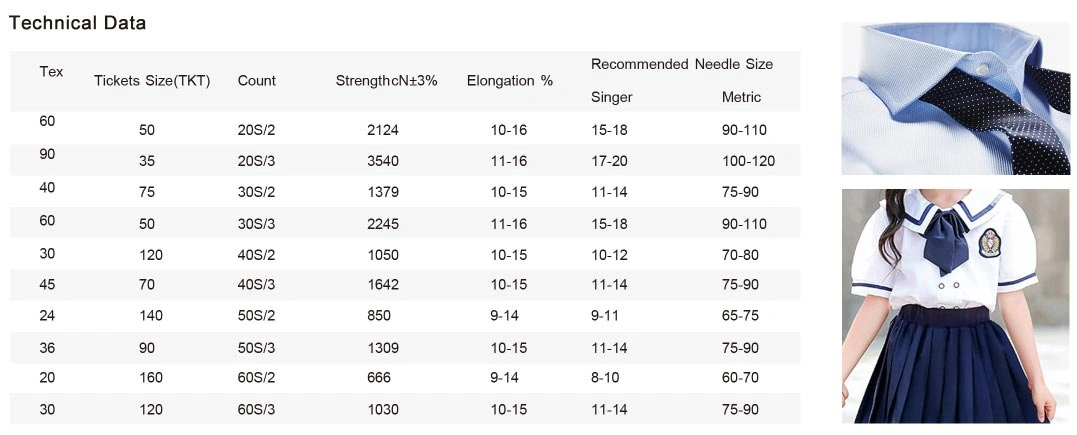
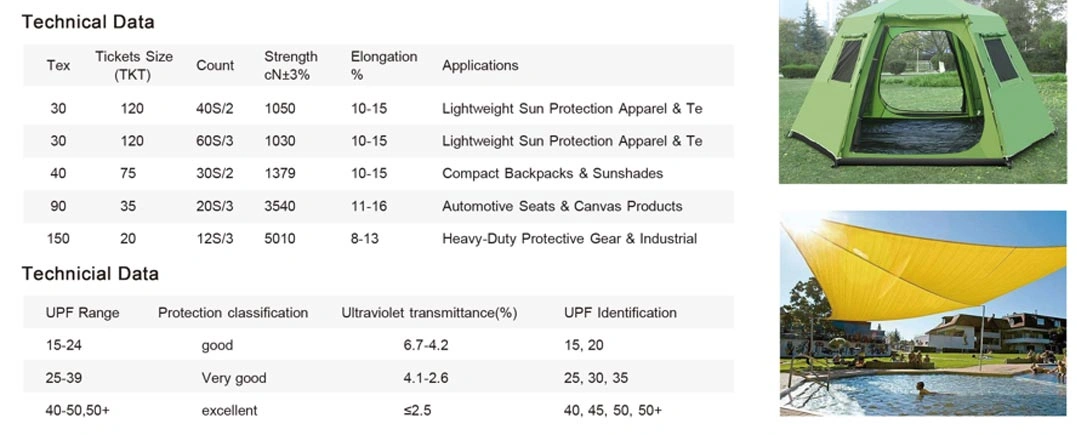
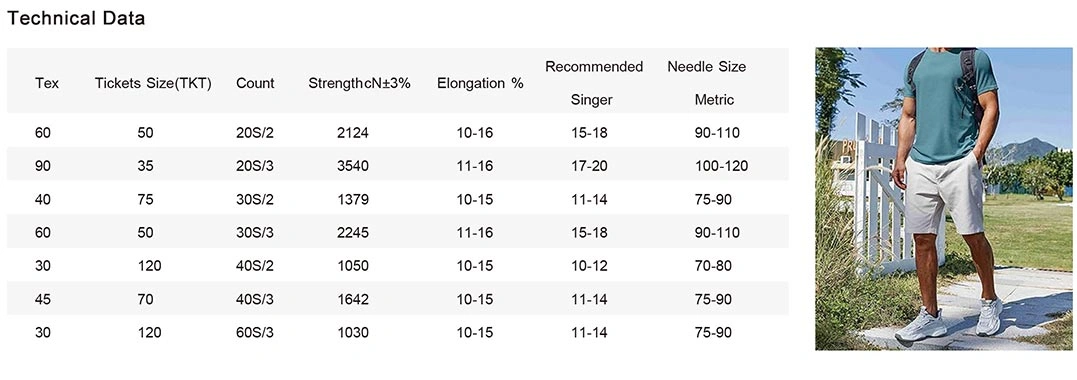
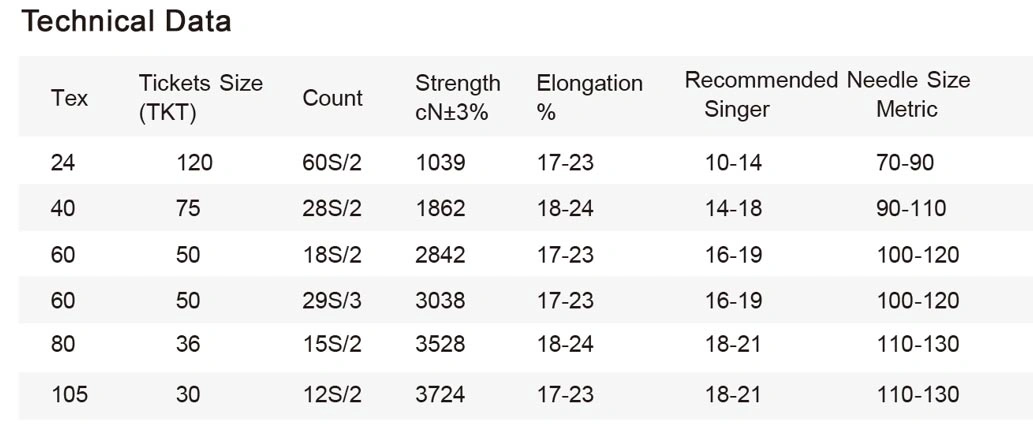
Common MH Thread Specification Conversion Chart
Spun Polyester Sewing Thread
Anti-UV Polyester Sewing Thread
Recycled Polyester Sewing Thread
Cotton-poly Corespun Polyester Sewing Thread
Need another MH thread size chart? Contact us for a free copy.


Selection Guide: Thread Size, Strength, and Application
Choosing the right sewing thread requires balancing size (Tex), material, and required seam strength. Fine threads are generally stronger than coarse threads in both tension and shear, making them suitable for applications requiring high strength and precise adjustments. Additionally, fine threads are less likely to loosen under vibration or load, providing more secure fastening. On the other hand, coarse threads are typically quicker and easier to install, which can be advantageous in applications where speed and ease of assembly are important.
Strength and Thread Diameter
-
For threads made of the same material, a higher Tex value indicates greater tensile strength.
-
The distance between thread crests, known as pitch, also influences the mechanical strength and performance of the thread; a smaller distance (finer pitch) can increase strength and compatibility in certain applications.
-
High-strength applications (e.g., safety equipment) require high-tenacity fibers and higher Tex sizes.
-
For general apparel, choose the finest thread that still meets strength requirements to ensure smooth seams and minimal puckering.
Recommended Thread Size by Application
|
Tex Size |
MH Ticket No. |
Typical Applications |
Recommended Needle Size |
|---|---|---|---|
|
Tex 25–40 |
Tkt. 120–100 |
Silk, lingerie, lightweight knits |
Nm 65/9–75/11 |
|
Tex 50–70 |
Tkt. 80–60 |
Suits, casual wear, home textiles |
Nm 80/12–90/14 |
|
Tex 75–100 |
Tkt. 50–30 |
Denim, workwear, bags, light upholstery |
Nm 100/16–120/19 |
|
Tex 120–180 |
Tkt. 20–15 |
Heavy leather, footwear, tents, upholstery |
Nm 120/19–160/23 |
Needle Selection Rule
The thread diameter should occupy approximately 40–50% of the needle eye diameter. It is important to match the thread diameter to the hole size of the needle eye to ensure proper fitting, ease of assembly, and optimal performance. Incorrect pairing of needle and thread increases friction and causes thread breakage and seam defects.
Conclusion
For reliable sourcing and consistent production quality, it is best to base sewing thread selection on the Tex standard, supported by brand-specific Ticket Numbers. MH Thread provides a complete range of thread materials and professional technical guidance to help buyers choose the optimal specification for each application.
Note: Always verify thread compatibility with your specific machinery and fabric requirements, as different standards or fittings may affect performance and suitability.
